
See comparable operating truth
Review revenue, margin, inventory and risk by brand, region, format and store cohort.
CHAIN OPERATIONS CONTROL · FROM HQ TO STORE
Put headquarters policy into store action and return store truth to headquarters
Built for company-owned, franchise and hybrid chains, the platform connects headquarters, regions, stores and distribution across merchandise, price, promotion, inventory, POS, inspections, membership, reconciliation and analytics—giving every policy, action and exception an accountable trail.
PRODUCT POSITIONING · OPERATIONS SYSTEM
Stores, merchandise, inventory, transactions, members and tasks become governed business objects that connect headquarters standards, regional supervision and frontline work.
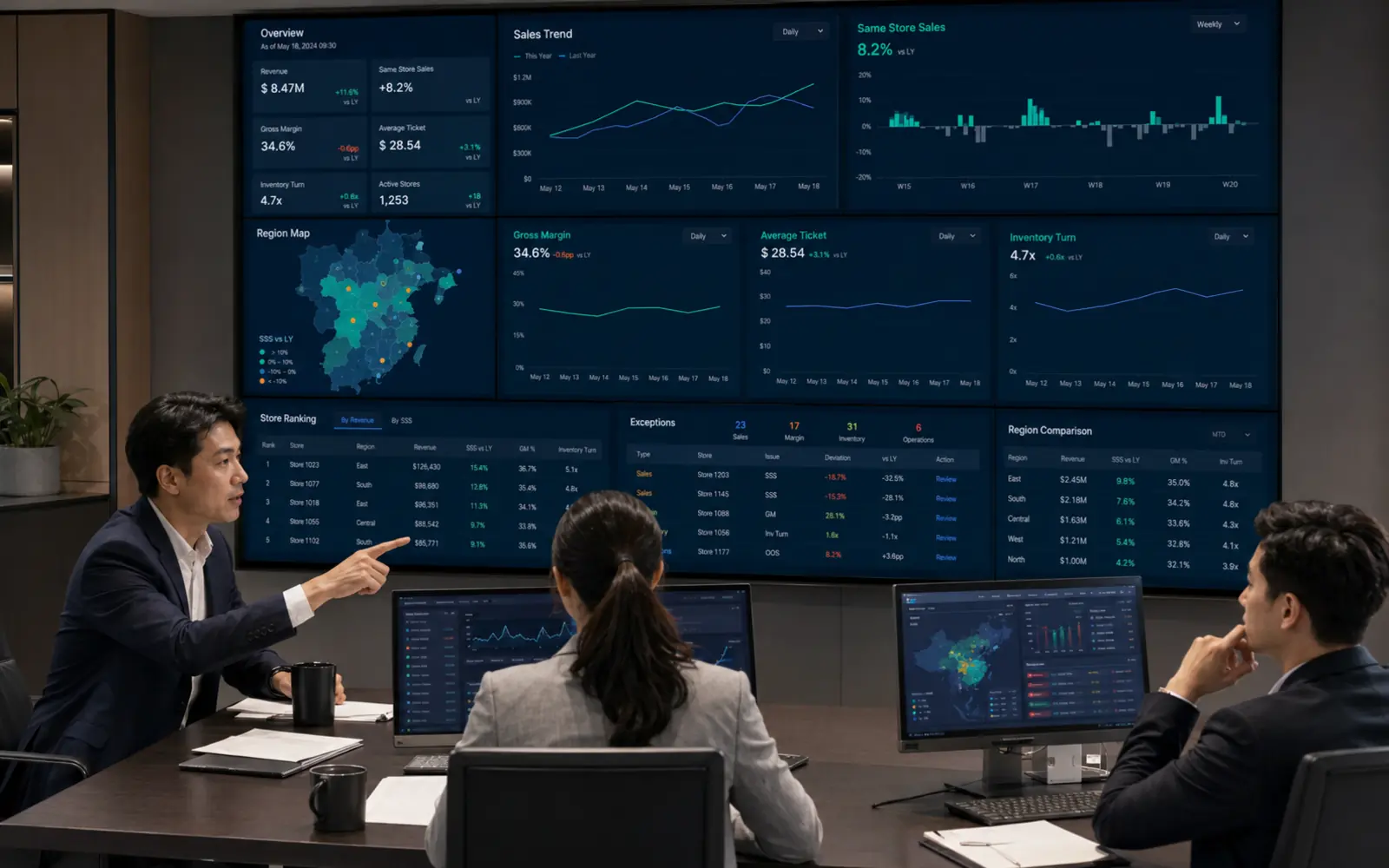
Review revenue, margin, inventory and risk by brand, region, format and store cohort.
Govern products, prices, campaigns, allocation, replenishment, transfers and expiry.
Plan visits, score standards, assign issues, verify fixes and track recurrence.
Handle POS, receiving, counts, displays, handovers and member service.
Reconcile payment, refund, discount, shift, count and cash differences.
Campaigns published at HQ, chat-based store notices, spreadsheet stock counts, scattered inspection photos and repeated member outreach make execution hard to prove.
The same item, display or service policy is interpreted differently by stores.
Stock, refunds, shifts and promotion exceptions lack process evidence.
OPERATIONS JOURNEY · CONTROL LOOP
Every step defines its rule version, applicable stores, accountable role, time window and exception path; publishing to stores is not proof of execution.
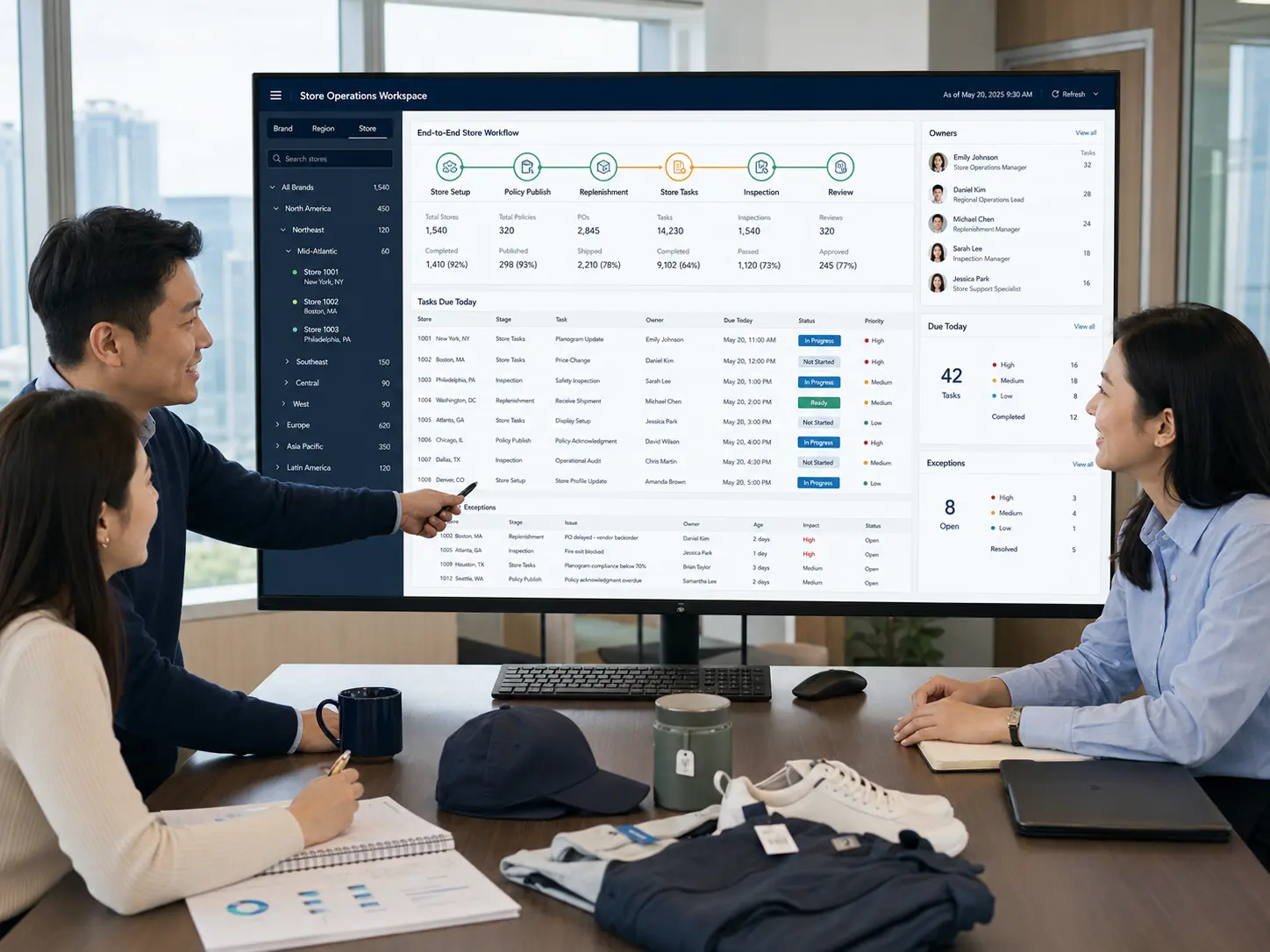
Break objectives, campaigns, owners and resources down to regions and cohorts.
Confirm items, stores, channels, qualifications, prices and display rules.
Approve, time, scope and validate policies before controlled publication.
Combine demand, availability, in-transit stock, capacity and lead time.
Complete receiving, displays, sales, counts, handovers and exception reports.
Inspect standards, assign issues and retain evidence through reinspection.
Match orders, payments, refunds, discounts, inventory and closing variances.
Compare stores, campaigns, items and members to improve the next cycle.
STORE WORKSPACE · ROLE-BASED WORK
PC, POS, tablet and mobile clients share business state while permissions follow organization and role; offline stores, device faults and shift variances enter recoverable queues.
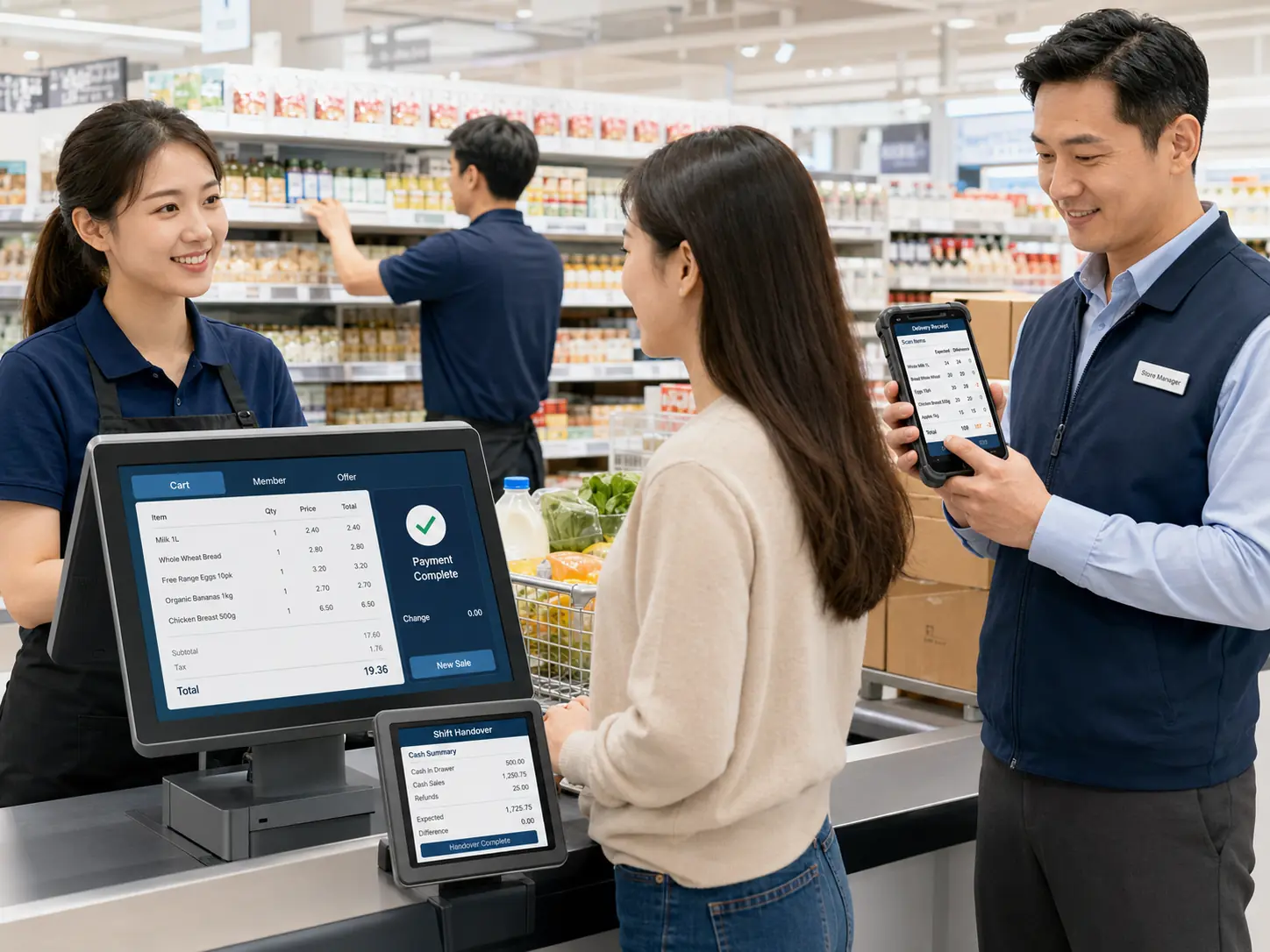
ROLE-BASED WORK · SHARED STORE TRUTH
Roles collaborate on the same store facts without forcing everyone into one overloaded dashboard.
Headquarters view: compare same-caliber sales, gross margin, inventory health, task execution and exceptions by region and format, then drill down without overwriting the store’s source records.
Discounts, overrides, credit, refunds and voids follow role and value thresholds.
Reconcile shift orders, tenders, cash float, physical cash and variances.
Open, close, display, clean, count and train through timed evidence work.
MERCHANDISE & INVENTORY · GOVERNED AVAILABILITY
Headquarters versions items and policies by brand, region, channel, format, member and time. Inventory suggestions stay explainable and do not replace authorized ordering.

POLICY TO AVAILABILITY · RELEASE READINESS
Before a campaign starts, validate price conflicts, eligible stores, stock coverage, materials and device sync; failures become accountable exceptions.
Demand-led replenishment: combine recent sales, seasonality, promotion calendars, lead time, safety stock and pack size into a suggestion; buyers or authorized operators still confirm the order.
Control code, barcode, variant, tax, unit, qualification and listing state.
Check stacking, exclusion, threshold, priority and effective scope.
Separate on-hand, available, reserved, in-transit, return, expiry and variance.
SUPERVISION & INSPECTION · REMEDIATION LOOP
Plans follow format, store type, risk and frequency. Every issue keeps its standard, location, owner, deadline and evidence; a score does not replace professional safety or regulatory judgment.

EVIDENCE-BASED SUPERVISION · EFFECTIVE CLOSURE
Use the right checklist for brand, format, region, equipment and risk.
Keep photos, notes, location, operator and standard version together.
Stores submit remediation; supervisors approve or return the evidence.
Analyze repeated issues by region, store and type to refine training and standards.
MEMBERSHIP & RECONCILIATION · TRUSTED GROWTH
Member consent, attributes, benefits, coupons and outreach retain traceable definitions. Orders, payments, refunds, points and discounts enter closing reconciliation—not just campaign exposure.
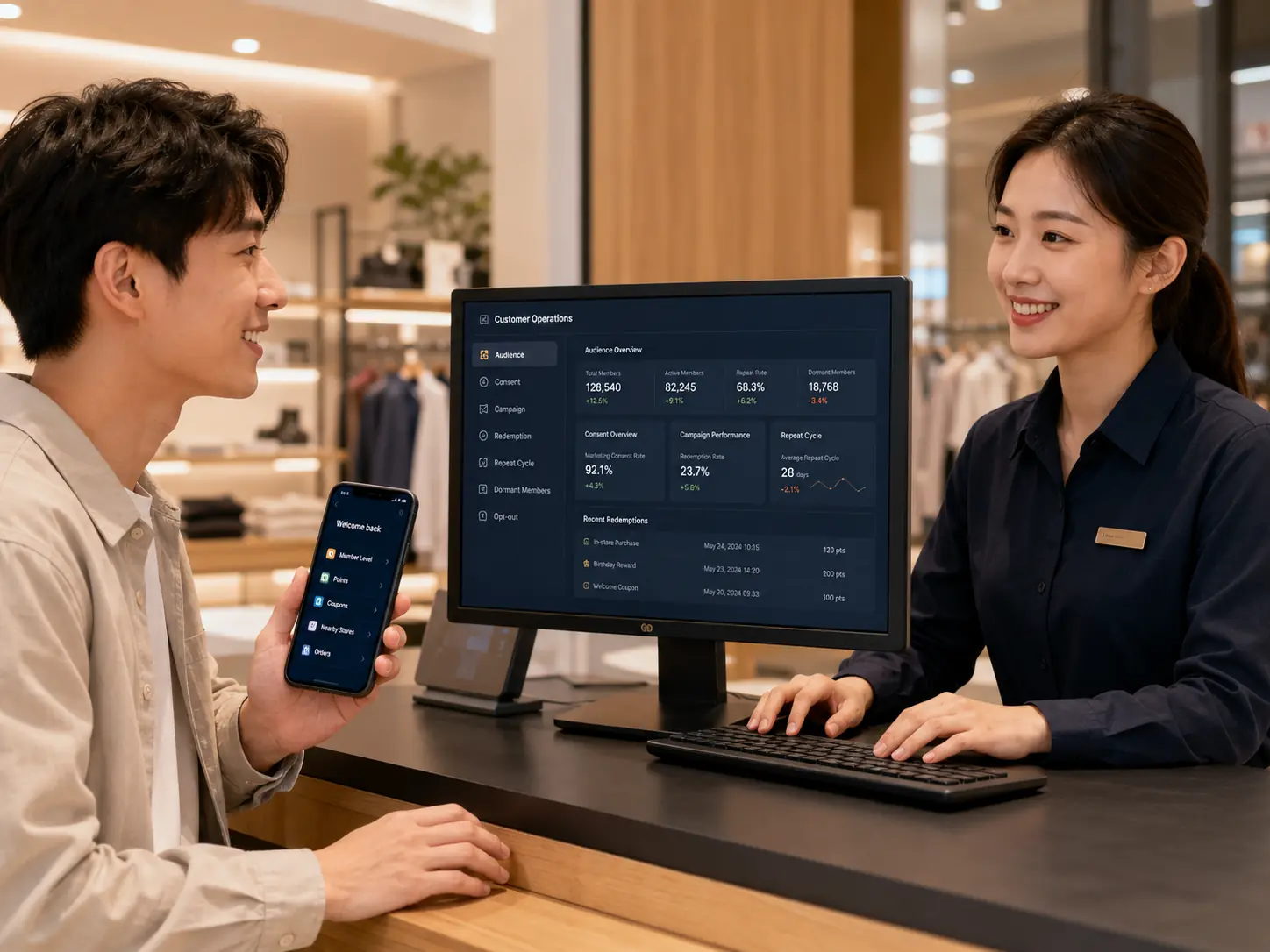
Orders, payments, refunds, points, discounts and adjustments stay in one closing batch.
Start with consent, segment rationale and benefit cost, then compare claim, redemption, incrementality, repeat and opt-out. Frequency and channel follow member choices and applicable rules.
Retain order, tender, shift, refund, discount allocation and manual adjustment detail so stores, operations and finance can confirm exceptions within authority.
HEADQUARTERS COMMAND CENTER · OPERATIONS GOVERNANCE
The console goes beyond revenue dashboards to govern access, policy publication, task execution, stock exceptions, integration health, reconciliation and audit trails.
APPLICATION SCENARIOS · MULTIPLE FORMATS
Start from common store, merchandise, inventory, membership and task capabilities, then configure pricing, expiry, service, appointment and compliance workflows by format.
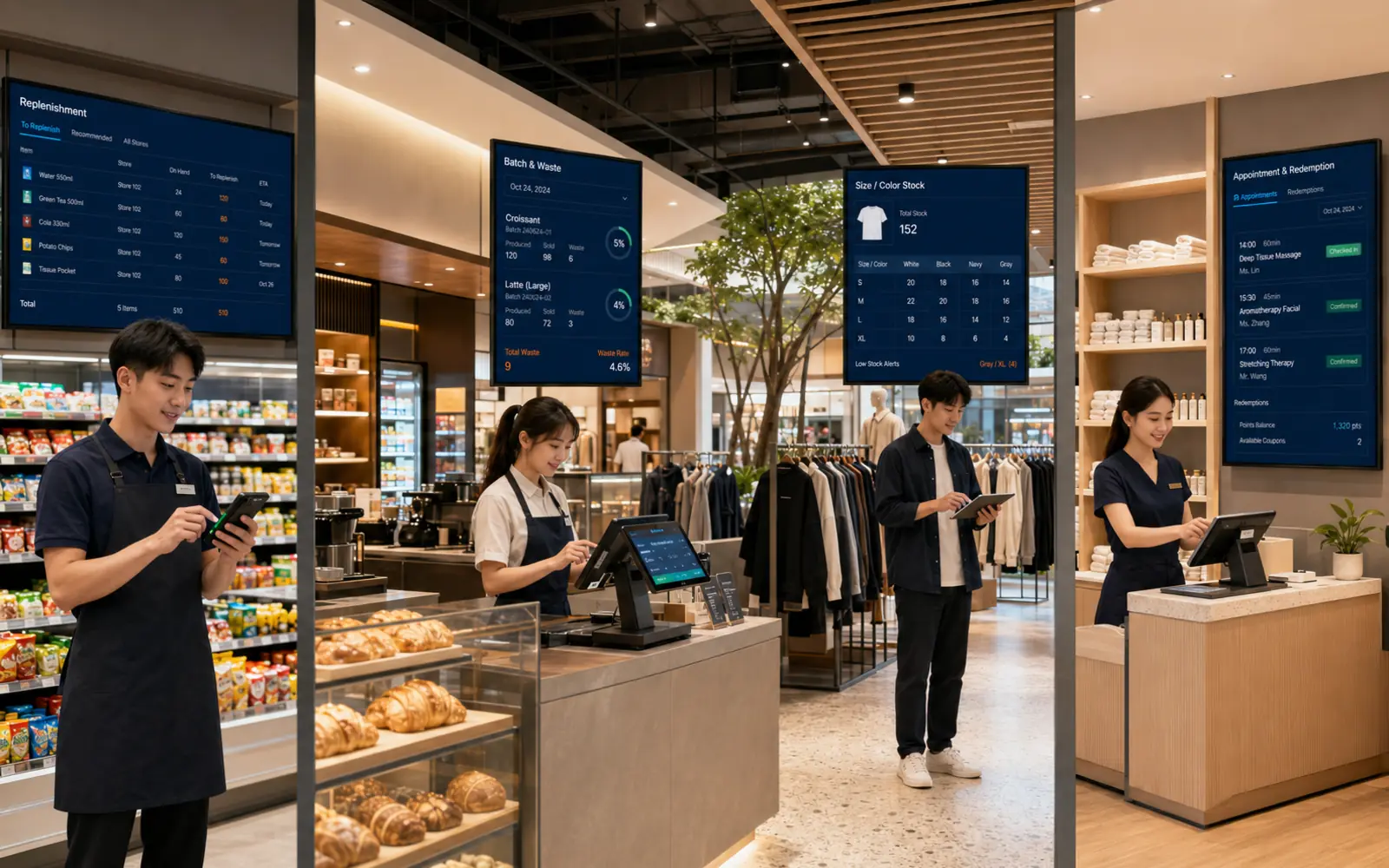
Multiple barcodes, promotions, short dates, shrink, counts and fast replenishment.
Color and size, transfer, attribution, member benefits and campaign review.
Short-life items, daily clearance, waste, daypart promotion and standards.
Samples, deposits, transfers, delivery, installation and after-sales work.
Appointments, service items, consumables, passes, employee credit and settlement.
Policy publication, franchise boundaries, regional authority and entity settlement.
SYSTEM BOUNDARIES · ACCOUNTABLE OPERATIONS
The platform does not replace store-manager judgment, finance confirmation or statutory responsibility. It provides rules, workflow, data and evidence, but does not automatically guarantee product safety, financial compliance, store performance or professional conclusions.
Not necessarily. It can connect existing POS, payment, ERP, WMS and finance systems to align measures, tasks and exception queues, or replace systems in phases by store.
The platform can suggest quantities from sales, seasonality, promotions, lead time and safety stock, but authorized people still confirm purchasing, transfers, budget use and supplier commitments.
Yes. Merchandise, price, inventory, membership, settlement and data access can vary by brand, entity, region, format and store while group measures remain comparable.
No. Inspections help identify issues, retain evidence and drive remediation. Food, fire, tax and other professional conclusions must be confirmed by appropriately qualified and authorized people.
BUILD A REPEATABLE STORE MODEL · START WITH ONE LOOP
Plan organization, master data, access, tasks, reconciliation and interfaces around your current POS, ERP, WMS, membership and finance landscape.