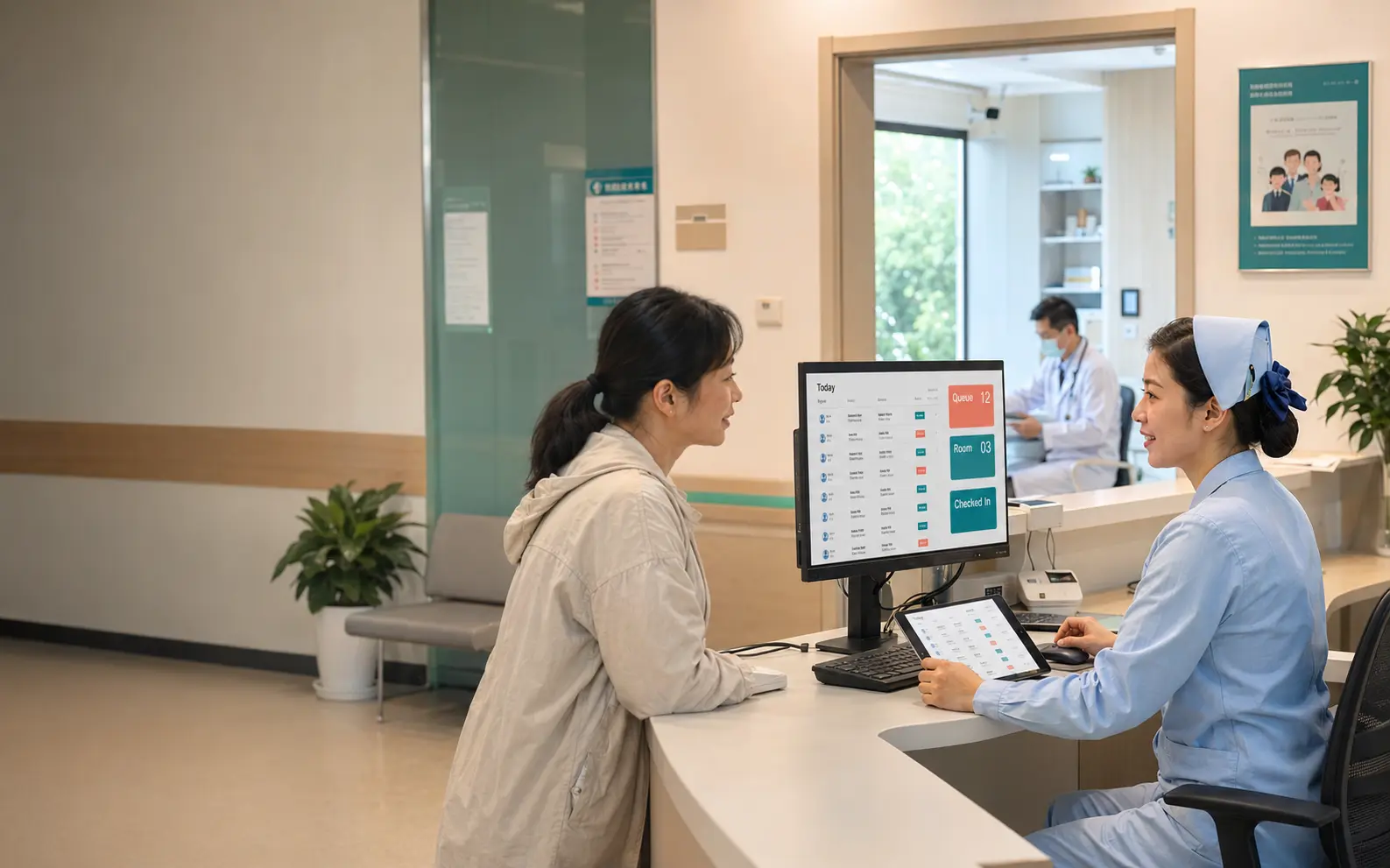
Clear booking, waiting, and recalls
Manage patient relationships, consent, charges, medication guidance, and follow-up preferences.
PRIMARY CARE OPERATIONS · CONNECTED CLINICS
A traceable journey from booking to follow-up
Built for licensed independent clinics, outpatient centers, and primary care groups. A patient master record and visit ID connect booking, triage, consultation, EMR, prescription review, billing, dispensing, inventory, and follow-up.
PRODUCT POSITIONING · CONNECTED CARE
The platform connects roles, workflow states, and operational evidence. Patients repeat less, front desks understand the floor, clinicians stay focused, pharmacy executes accurately, and leaders see efficiency and quality. It never replaces diagnosis or professional prescription review.
Manage patient relationships, consent, charges, medication guidance, and follow-up preferences.
Registration, check-in, calling, item pricing, payment, refunds, handover, and daily close.
Triage vitals, history, structured notes, clinical orders, and execution status.
Prescription review, preparation checks, lot and expiry, returns, and stock counts.
Monitor waiting, EMR completion, exceptions, pharmacy operations, and finance reconciliation.
Standardize roles, items, medicines, template versions, quality controls, and reporting definitions.
OPERATIONAL REALITY · WORKFLOW GAPS
When booking, EMR, prescriptions, billing, dispensing, inventory, and follow-up live in separate records, each broken handoff makes patients repeat information, staff recheck work, pharmacy lose traceability, and leaders struggle to review performance.
EMR, prescriptions, reviews, billing, dispensing, and inventory must remain linked to the same visit.
Patients register repeatedly while the front desk loses a live view of waiting and no-shows.
Prior visits, allergies, medicines, and recall records are costly to locate.
Ordering, review, billing, preparation, and checking no longer align.
Split packs, returns, counts, refunds, and handovers use inconsistent records.
OUTPATIENT JOURNEY · CONNECTED HANDOFFS
From selecting a clinic, service, and time slot through triage, consultation, prescription review, payment, dispensing, and recall, every role works from the same visit record to reduce duplicate entry and status chasing.
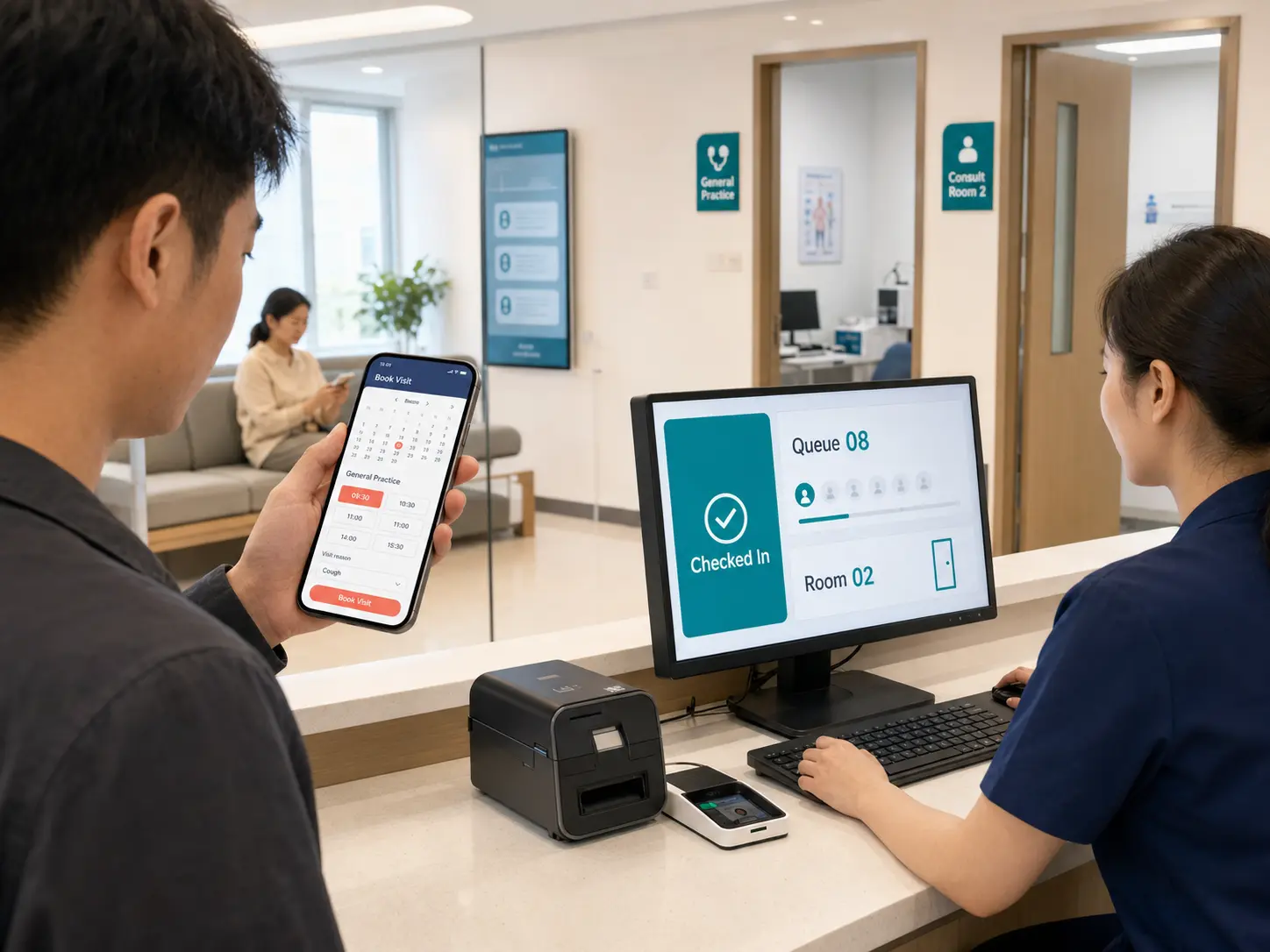
Clinic, service, clinician, time slot, and identity check.
Arrival status, vitals, allergies, and essential observations.
Complaint, history, examination, opinion, and clinician signature.
Tests, treatment, and prescriptions from licensed clinicians.
Professional review, returned changes, and itemized charges.
Payment moves the visit into test or treatment queues.
Preparation checks, lot deduction, receipt, and returns.
Recall tasks, record archive, audit, and quality checks.
VISIT TRACE · LIVE HANDOFFS
This demonstration explains workflow states. It does not represent automated diagnosis or clinical decision-making.
CLINICAL WORKFLOW · ACCOUNTABLE RECORDS
The patient profile consolidates visit history, allergy information, and medication records. Clinicians complete structured EMR, orders, and prescriptions within the visit while the system preserves signatures, addenda, corrections, and posted results without overwriting history.

Identify duplicate records, link guardian relationships, and consolidate visit, prescription, follow-up, and authorization history.
Identity check · Guardian link · Consent scopeCombine structured notes with clinician narrative while preserving signatures, addenda, corrections, and version changes.
EMR templates · Addenda · Version auditLicensed clinicians issue orders or prescriptions based on care delivered, with test, treatment, and result states returned to the visit.
Order status · Execution queue · Result postingThe system flags allergy, duplicate therapy, dosage, or stock exceptions; clinicians and pharmacists make the final decision.
Decision support · Human review · Audit evidencePRESCRIPTION & PHARMACY · CLOSED LOOP
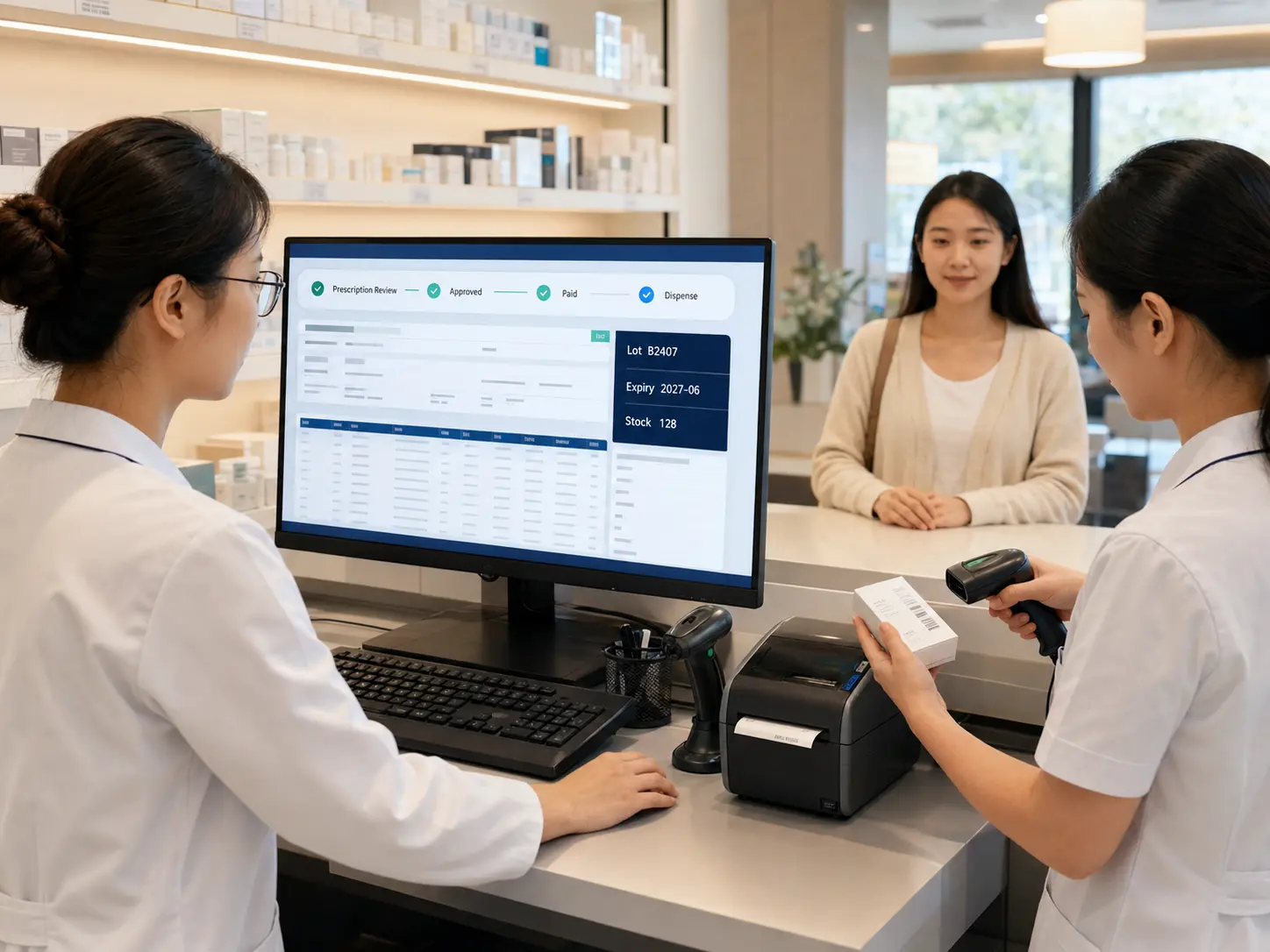
Prescription status stays connected to billing, dispensing, and inventory. Pharmacists can approve, return, or hold a prescription; dispensers select the actual lot, prepare, check, and post the issue. Returns and count variances keep their reason and operator.
Pending, returned, amended, and approved states keep owner, time, and notes.
Medicine, care, and service prices are maintained by site and effective date.
Link prescription, quantity, lot, preparer, checker, and electronic receipt.
Connect purchasing, receiving, transfer, split packs, dispensing, returns, and counts.
PATIENT SERVICES · CONTINUITY
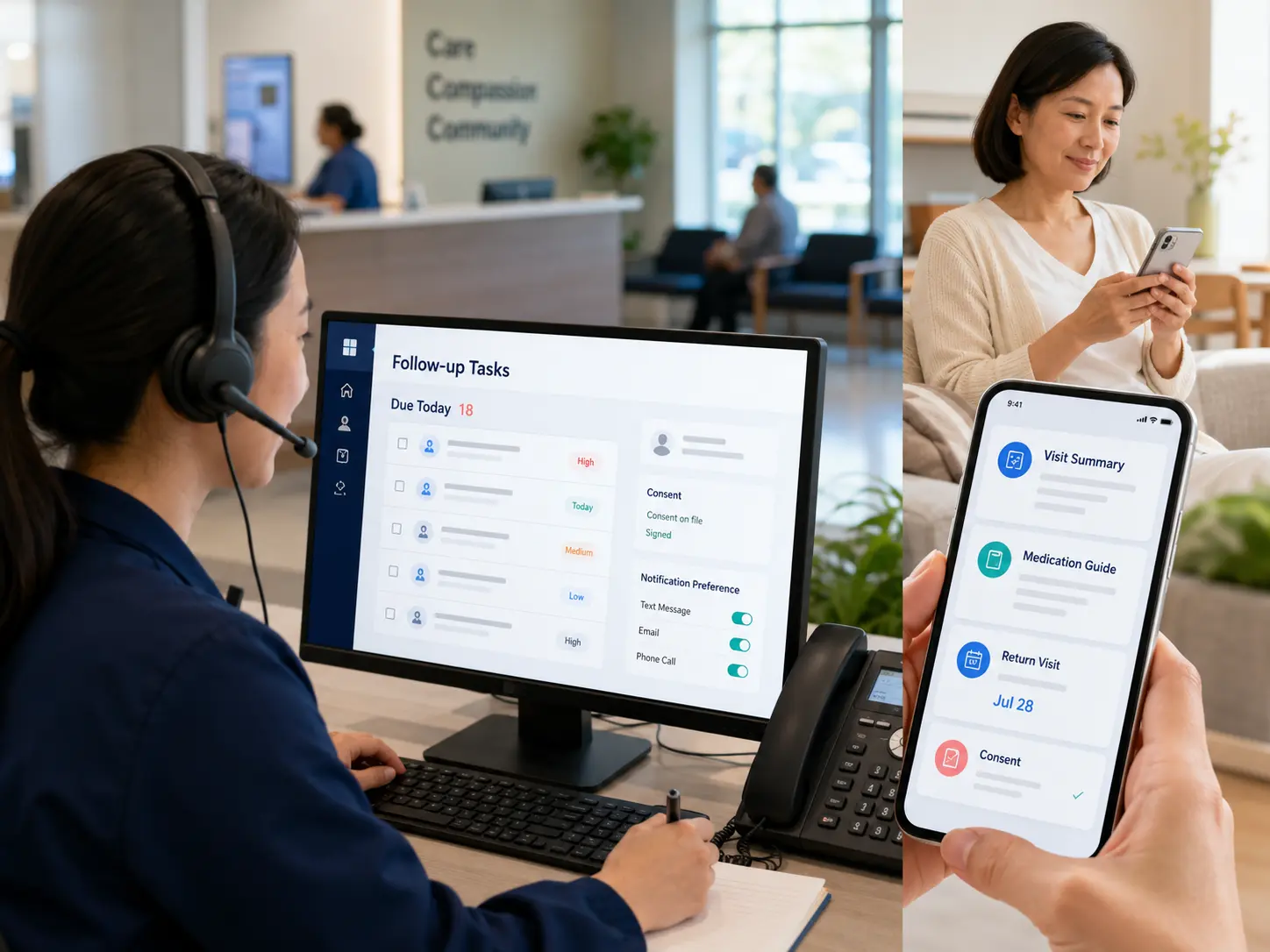
Patients can see appointments, queues, charges, visit summaries, medication guidance, and recall dates. Clinics create follow-up tasks from care plans and keep service notifications separate from marketing messages.
Support self, child, older adult, and other applicable patient relationships and authorizations.
Share arrival, waiting, consultation, payment, and dispensing states as appropriate.
Create tasks and outcomes from clinician plans, patient preferences, and authorized channels.
Keep service reminders necessary and provide applicable opt-out controls for marketing.
OPERATIONS CONTROL CENTER · GOVERNANCE
The console covers the clinic floor, EMR completion, prescription review, pharmacy inventory, financial reconciliation, and multi-site configuration. It avoids ranking clinicians by revenue or prescription value in ways that could incentivize inappropriate care.
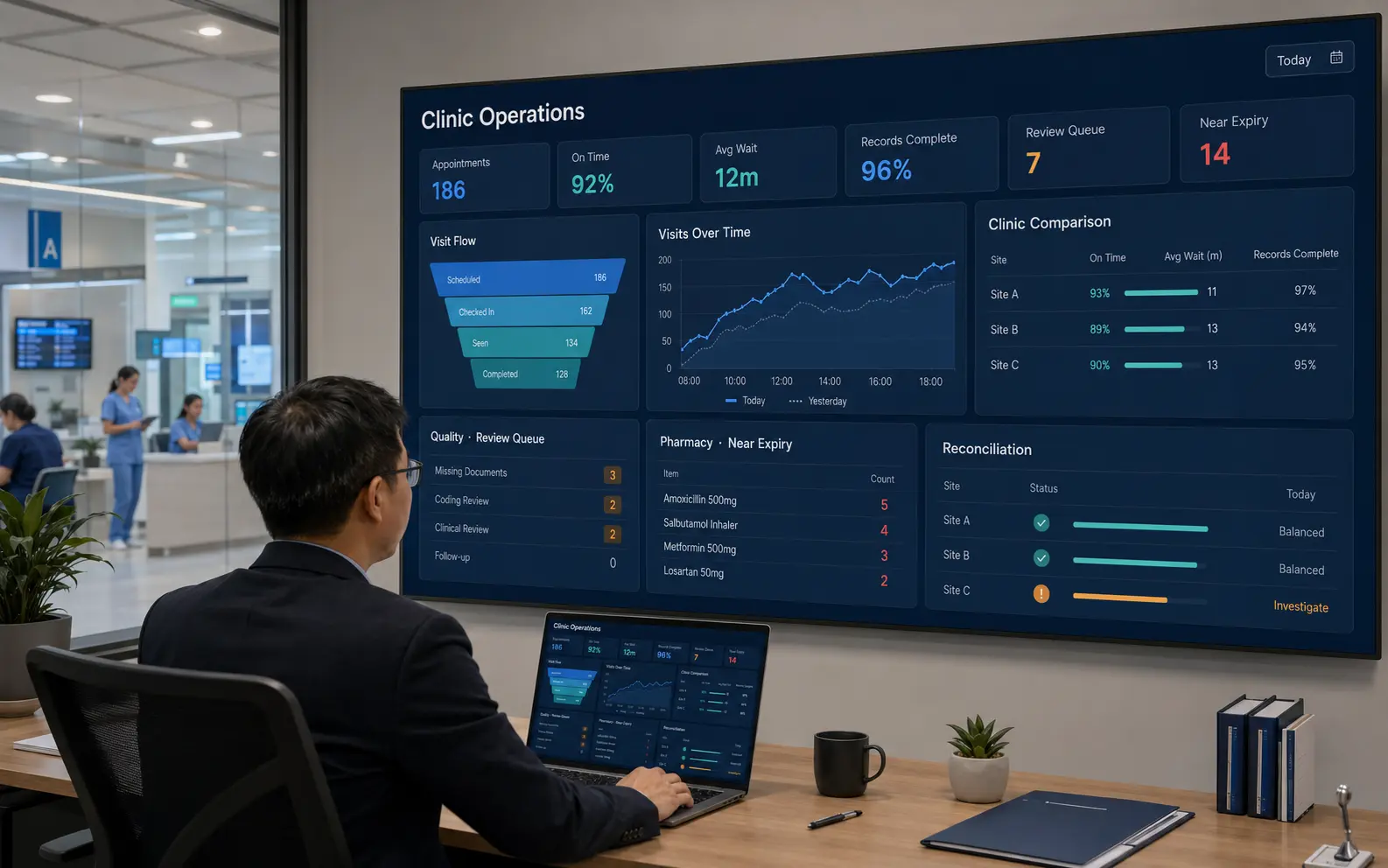
Monitor patients on site, room load, no-shows, average waits, and queue exceptions.
Track EMR completion, signatures, returned prescriptions, result posting, and resolution status.
Monitor shortages, lots, count variances, refunds, handovers, and payment channel reconciliation.
Standardize role scope, items, medicines, EMR templates, configuration changes, and activity records.
APPLICATION SCENARIOS · FLEXIBLE CONFIGURATION
A shared foundation for patients, visits, prescriptions, services, inventory, and access can support specialty-specific EMR templates, execution workflows, recall plans, and site operations.
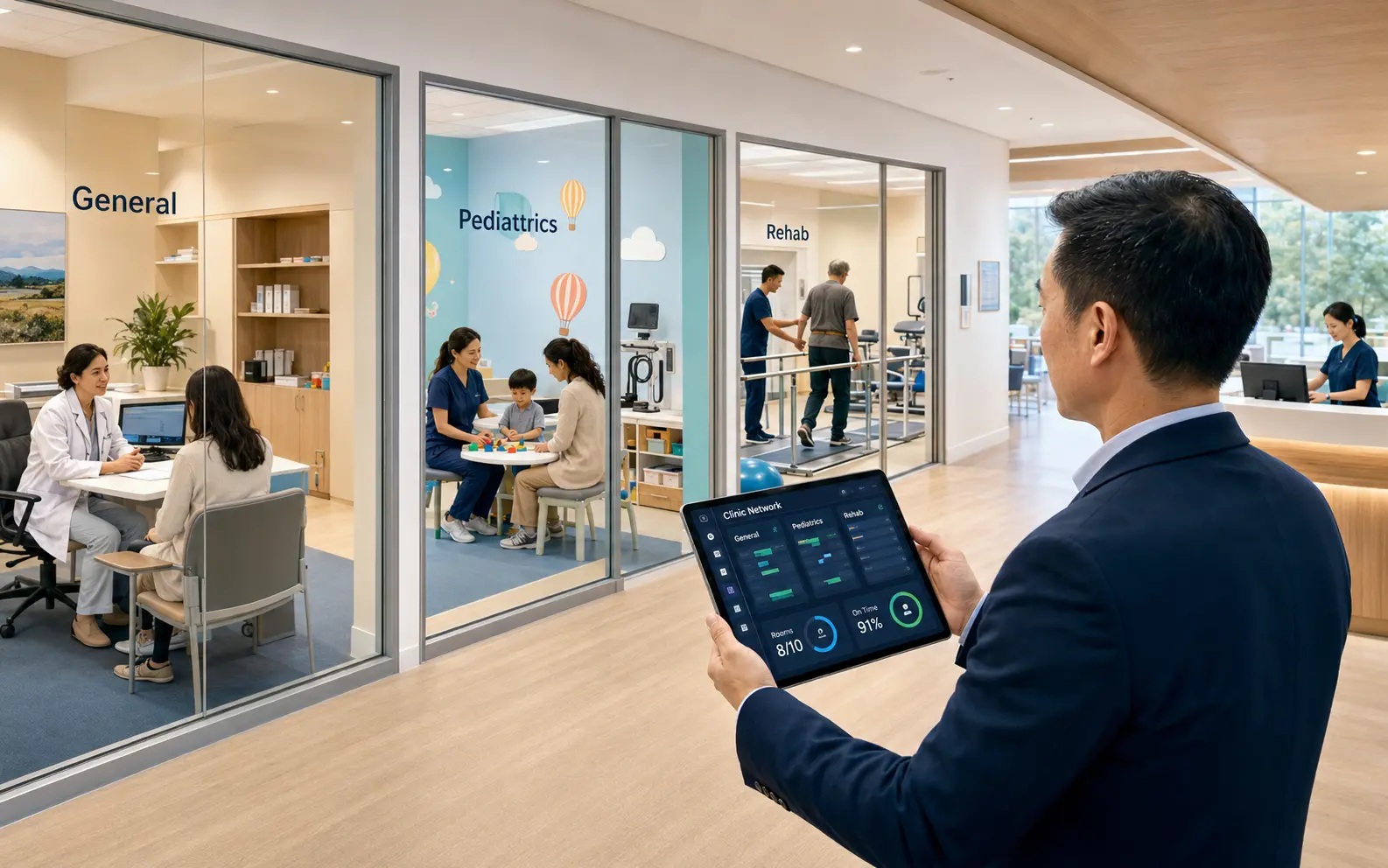
Support booking, triage, longitudinal EMR, prescription pharmacy, and recall.
Configure specialty notes, prescriptions, herbal stock, preparation, and treatment recalls.
Manage children, guardian relationships, authorization, and continuous visit records.
Connect booking, care plans, materials, billing, and recall reminders.
Manage treatment courses, execution records, schedules, charges, and phased follow-up.
Standardize catalogs, access, templates, quality controls, and consolidated reporting.
MEDICAL & DATA BOUNDARIES · RESPONSIBLE USE
All demonstration data is fictional and contains no real patient information.
FREQUENTLY ASKED QUESTIONS · IMPLEMENTATION
It typically covers booking and check-in, triage and waiting, outpatient EMR, orders and prescriptions, prescription review and billing, dispensing and inventory, recall and follow-up, and operations. Insurance, e-invoice, lab, and imaging features depend on credentials and integrations.
No. It supports workflow coordination, records, and rule-based alerts. It does not replace consultation, diagnosis, treatment decisions, clinician signatures, or professional prescription review.
Receiving records the lot and expiry. Transfers, split packs, dispensing, returns, and counts stay linked to the actual batch, with short-dated stock, shortage, and variance alerts.
Addenda, correction notes, and version trails preserve the original content, updated content, operator, and time instead of overwriting the prior record.
Yes. Independent clinics can use lightweight booking, EMR, billing, and pharmacy workflows. Groups can add central catalogs, role scope, standard templates, quality controls, and multi-site reporting.
BUILD A CONNECTED CLINIC · GET STARTED
Share your organization type, specialties, roles, daily visit volume, prescription and pharmacy model, payment methods, drug inventory, follow-up plans, and current integrations. We will outline workflow, information architecture, implementation scope, and integration options.