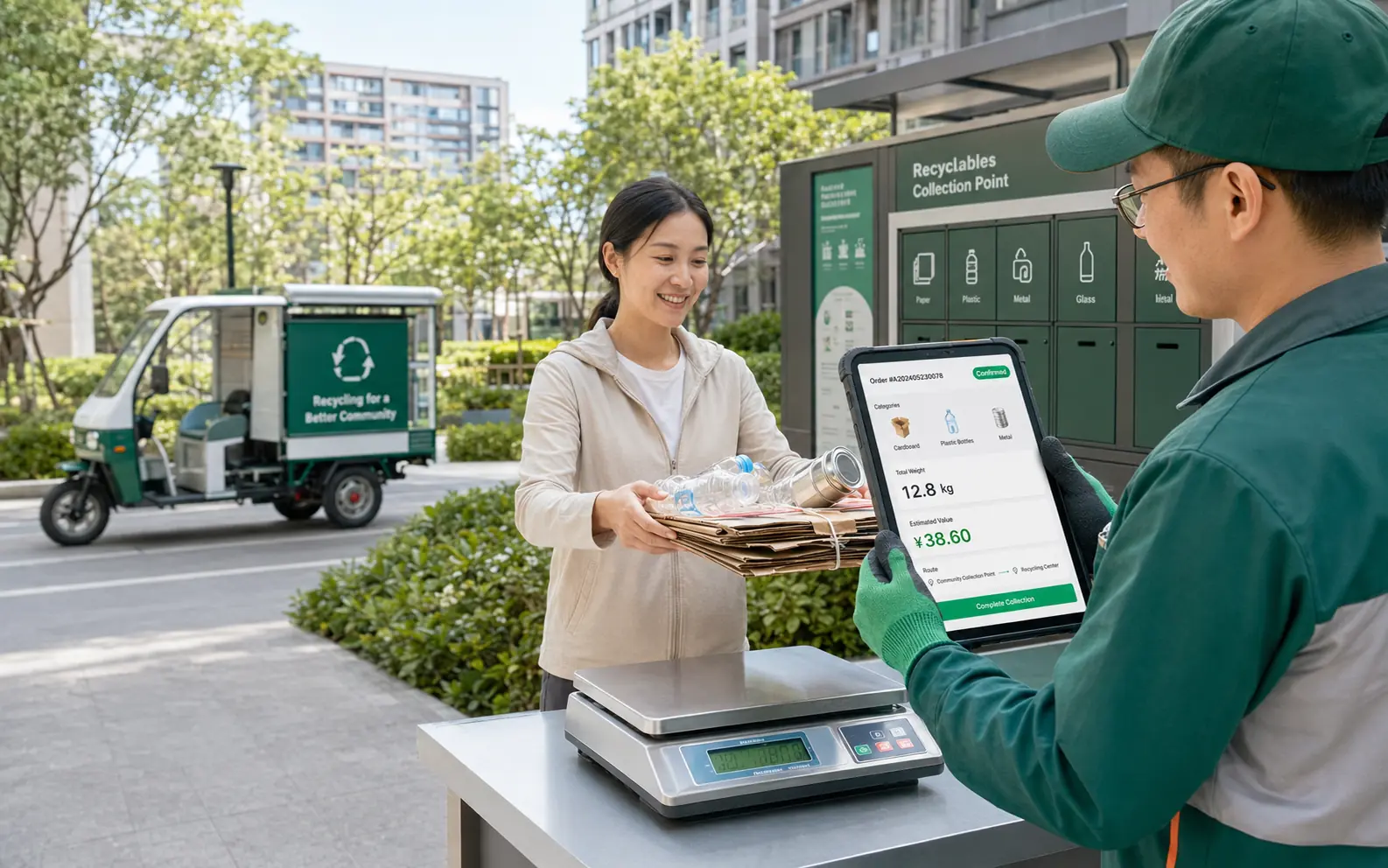
Clear sorting, easy handoff
Check accepted materials, reference prices, book pickup and receive settlement proof.
COMMUNITY CIRCULARITY · LOCAL RECOVERY
Easy for residents, efficient for collectors, accountable for operators
Connect residents, property teams, collectors, neighborhood stations, sorting centers and downstream recyclers through one workflow covering booking, dispatch, pickup, weighing, confirmation, settlement, sorting and destination traceability.
PRODUCT POSITIONING · CONNECTED CIRCULARITY
Beginning with a resident request, the platform connects property coordination, grid-based fulfillment, verified weighing, station reweighing, sorting, inventory, outbound procurement and destination records in one traceable chain.
Check accepted materials, reference prices, book pickup and receive settlement proof.
Manage collection days, station inspections, campaigns and resident feedback.
Combine nearby orders, verify materials, weigh, confirm and report exceptions.
Receive, reweigh, grade, batch, bin, bale and reconcile daily operations.
Inspect, procure, load and hand over by batch with complete origin records.
Coordinate pricing, stations, people, vehicles, funds, risk and performance.
BUSINESS CHALLENGES · OPERATIONAL REALITY
Fragmented demand, volatile markets, verbal pricing, empty collector trips, station reweighing gaps and missing downstream records make service cost, transaction trust and operating efficiency difficult to balance.
Classification rules, original weight, price version, deduction evidence and batch destination must remain continuously auditable.
Residents may not know what is accepted, how to prepare it or when pickup is available.
Material, grade, contamination and market adjustments are often explained verbally.
Time windows, routes, vehicle load and station capacity are not coordinated.
Resident orders, station inventory and downstream shipments cannot be reconciled.
RECOVERY JOURNEY · END-TO-END FLOW
Residents first see accepted materials and indicative prices. Grid dispatch then coordinates verification, weighing, confirmation and payment, while station operations continue with reweighing, sorting, outbound shipment and destination records.
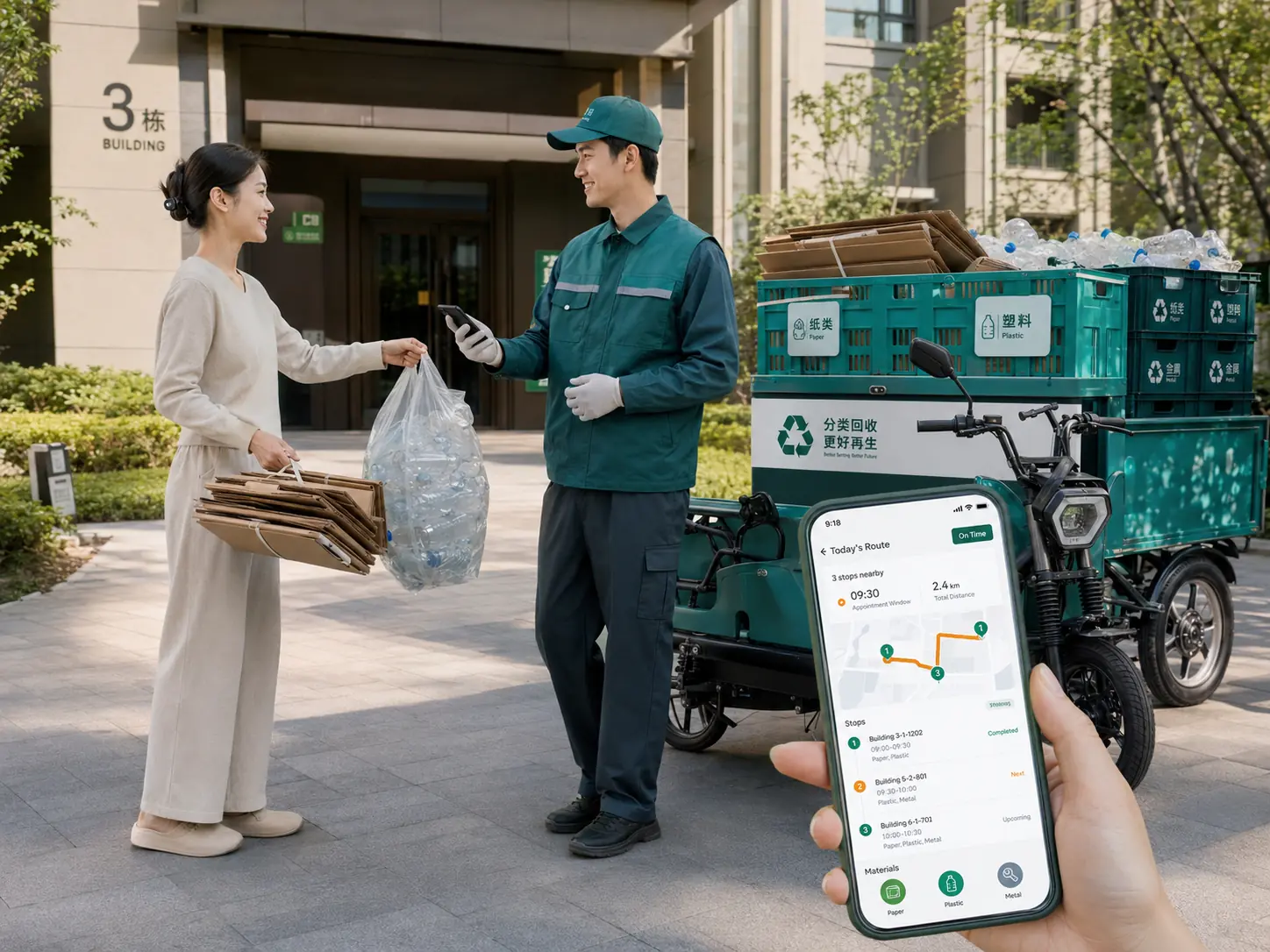
The system consolidates compatible jobs by community grid, material and time window to reduce repeat routes and empty miles.
Acceptance, indicative price and exclusions.
Address, window, quantity, photos and mode.
Grid, route, load and service radius.
Source, category, contamination and exclusions.
Raw reading, grade, deductions and consent.
Payment, wallet, rewards and e-receipt.
Reweigh, grade, batch, location and loss.
Load, handoff, reconciliation and flow.
CORE CAPABILITIES · EVIDENCE-BASED OPERATIONS
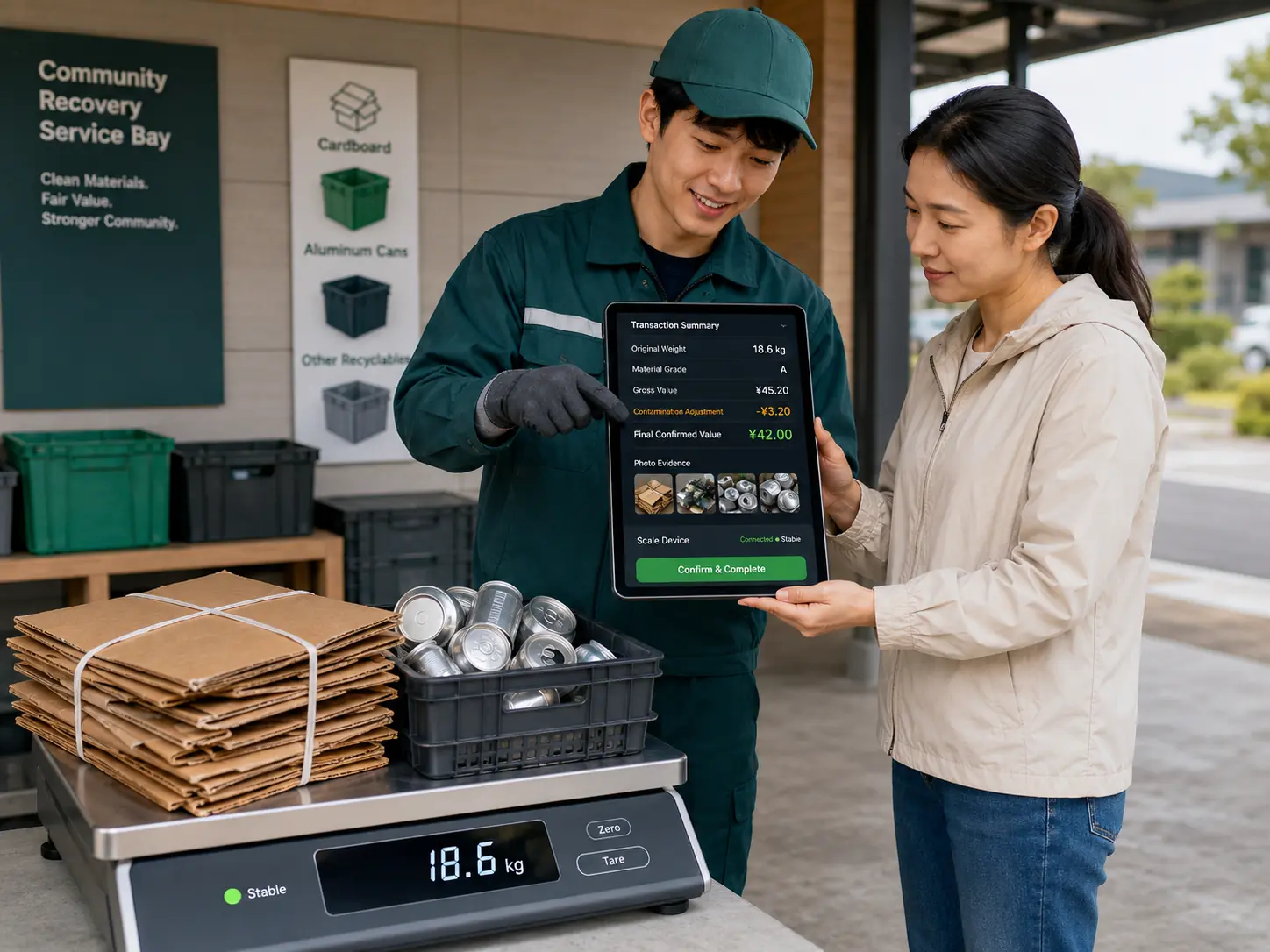
Electronic scales, material grade, price version and resident confirmation create the transaction record. Station reweighing stays linked to the same order, with threshold breaches routed automatically for review and adjustment.
Configure preparation rules for paper, plastic, metal, textiles and small appliances. Images assist identification; on-site verification determines the final category.
Material catalog · Exclusions · Visual examplesBind the scale to the order and retain raw readings. Link station reweighing to the same material and route threshold differences for review.
Device ID · Calibration record · Difference thresholdMaintain price versions by region, channel, material, grade and time. Manual weight or price changes require reasons and approval records.
Indicative price · Deduction rules · Version historyTrace materials from resident order to station batch, storage location, outbound load and downstream receipt while keeping physical and financial records aligned.
Order record · Batch code · Handoff archiveRESIDENT & STATION EXPERIENCE · ACCESSIBLE SERVICE
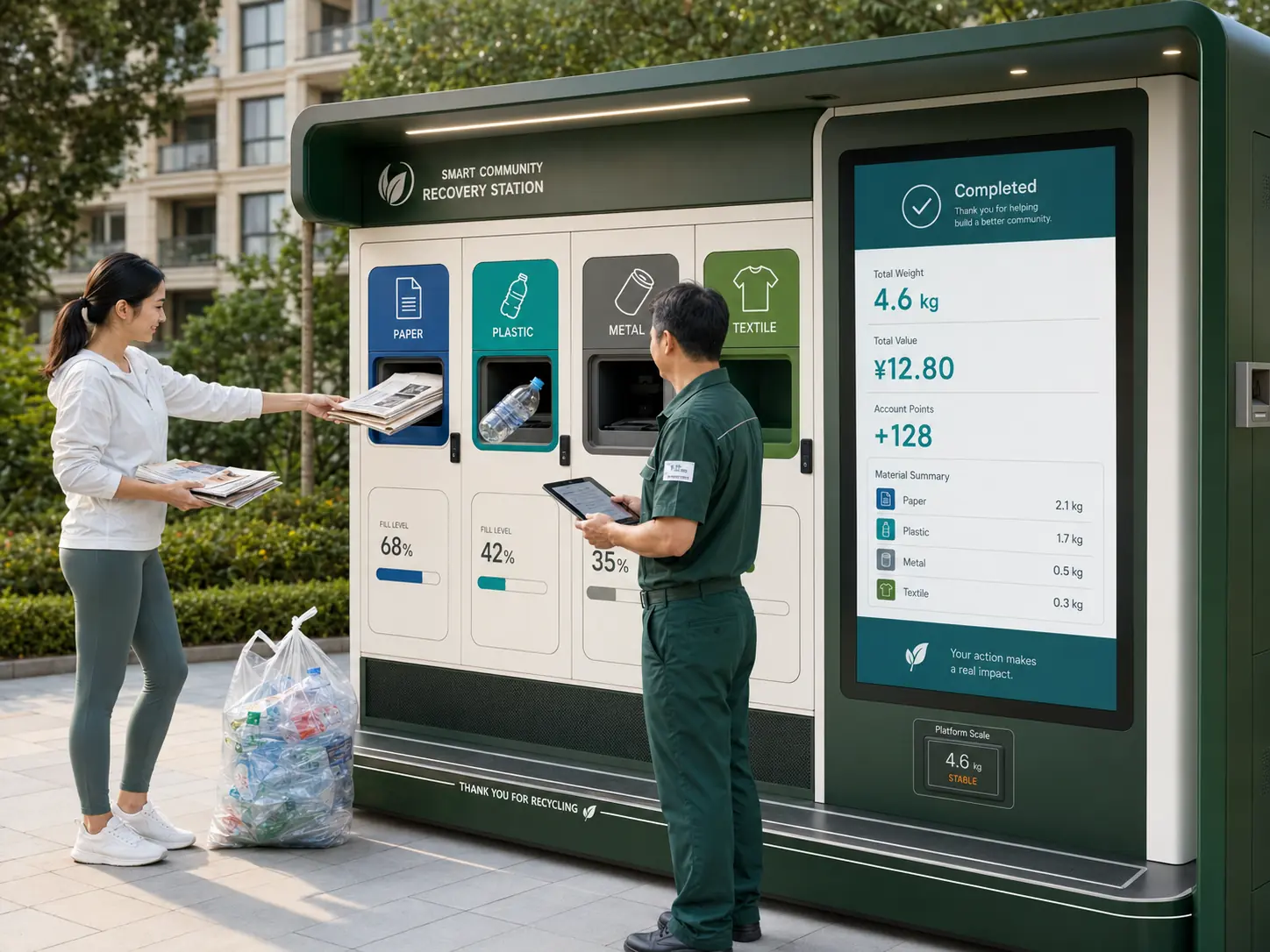
Residents can look up materials, book pickup or choose a drop-off point. Smart stations return weight, value and rewards, while property teams manage collection days, device status and community feedback.
Show preparation rules, pricing unit, validity period and excluded items.
Track the window, collector, arrival, weighing, confirmation and payment.
Identity check, sorted deposit, device weighing, rewards and e-receipt.
Use points, donations and community campaigns as service incentives—not investment returns.
DISPATCH & PRICING ENGINE · CONTROLLED RULES
The dispatch engine considers community grid, time window, vehicle load, material and station capacity. The pricing center manages market inputs, grade coefficients and contamination rules separately, with every published version retained.
OPERATIONS CONTROL CENTER · REGIONAL COMMAND
Built around order facts and physical batches, the console brings fulfillment, route efficiency, station overflow, inventory, procurement, settlement and complaints into one operational view.
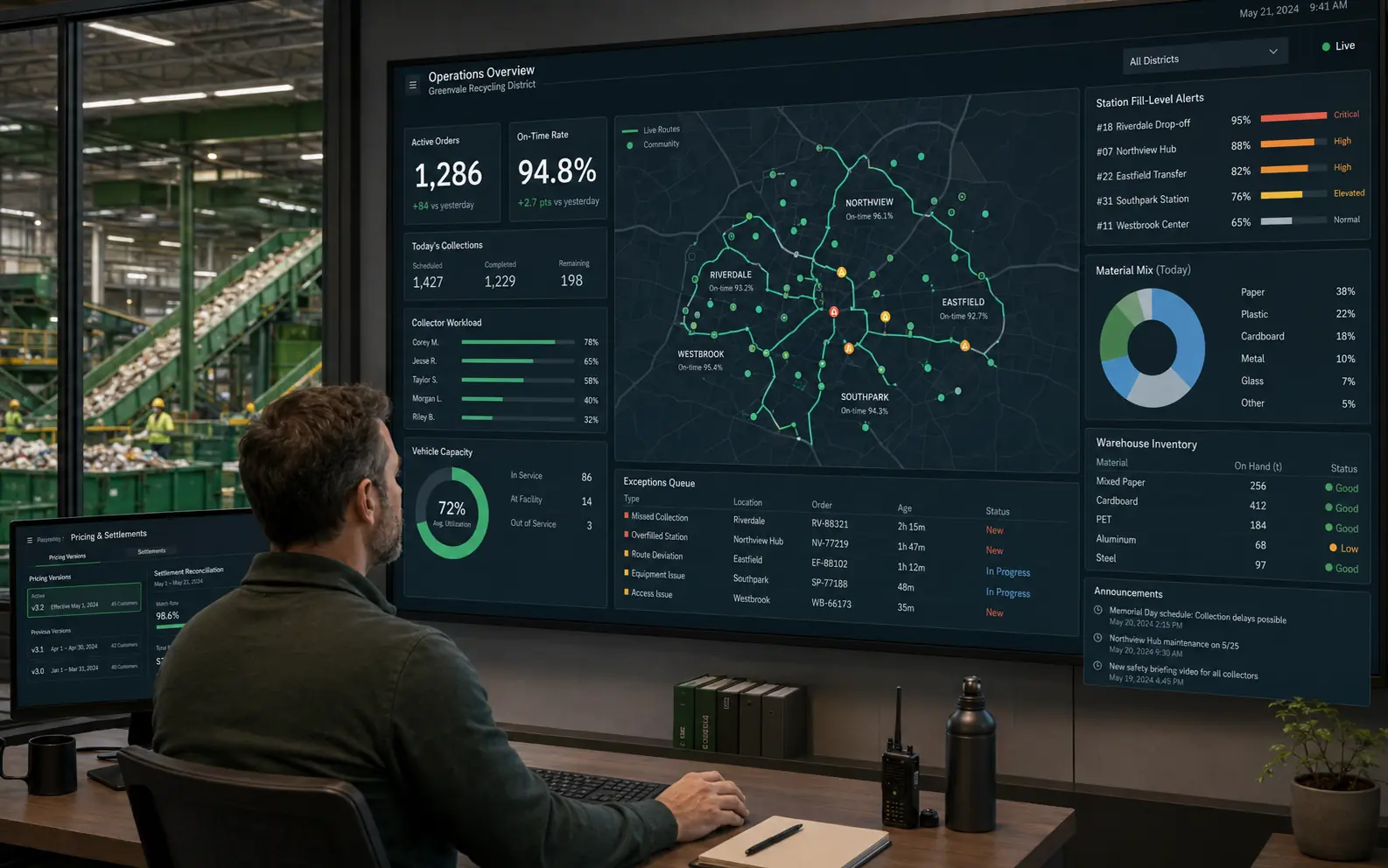
Multi-organization access, service zones, shifts, dispatch, route consolidation, check-ins and SLA.
Electronic scales, smart stations, raw readings, batches, locations, loss, counts and transfers.
Downstream buying, loading, resident payments, collector fees, receivables, payables and invoices.
Green accounts, community campaigns, exception orders, manual price changes, blocklists and destination mix.
APPLICATION SCENARIOS · FLEXIBLE DEPLOYMENT
The same material, pricing, order, device and batch foundation supports doorstep pickup, scheduled collection days, smart stations, campus programs and regional resource recovery networks.
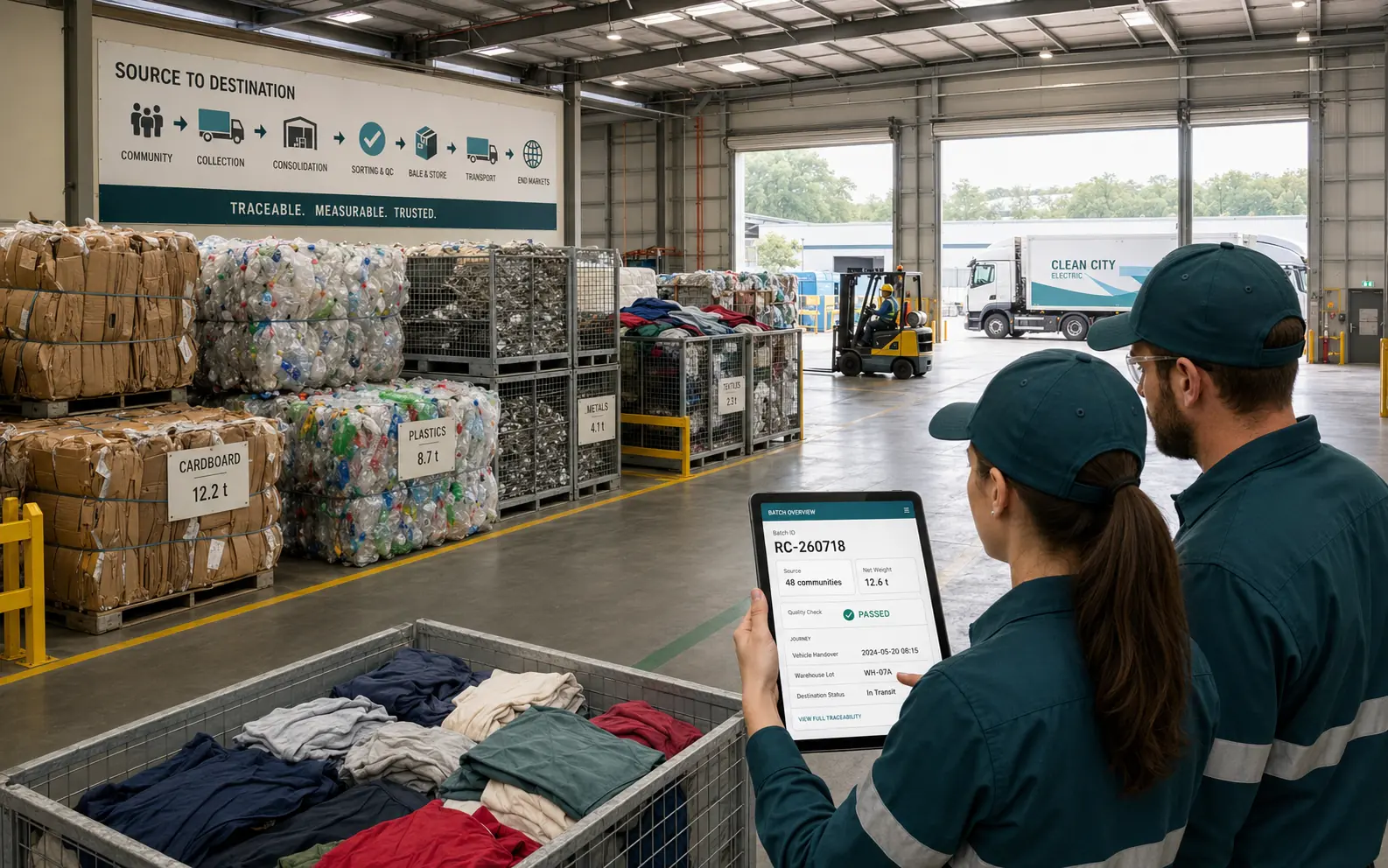
Residents book online; collectors arrive by grid and time window for weighing and settlement.
Run scheduled collection days, community campaigns, station inspections and participation reports.
Manage registration, materials, teams, on-site handoff and consolidated transfer by event.
Monitor device uptime, weighing, bin capacity, faults and maintenance work orders.
Support bulk booking and settlement for schools, offices, industrial parks and retail complexes.
Coordinate communities, stations, carriers and destination data across a service region.
BUSINESS BOUNDARIES · SAFE SCOPE
FREQUENTLY ASKED QUESTIONS · OPERATING RULES
The platform supports doorstep booking, property-managed drop-off points and smart recycling stations. Availability depends on the community, service schedule, material type and operating coverage.
The system calculates value using the confirmed material, grade, raw electronic scale reading and active price version. Contamination or downgrade adjustments are shown with supporting evidence before resident confirmation.
Both readings remain linked to the same order and device record. Differences beyond the configured threshold trigger review of photos, raw readings, transport loss and operator records before adjustment or exception resolution.
The console binds each station, scale and bin, monitors connectivity, overflow, faults and maintenance, and creates collection or maintenance tasks when thresholds are reached.
The platform supports ordinary recyclables transactions and operating coordination. It does not replace regulated municipal waste, hazardous waste or special waste collection and treatment systems. Out-of-scope materials must move through qualified channels.
BUILD A COMMUNITY RECOVERY NETWORK · GET STARTED
Share your community count, materials, handoff modes, teams, vehicles, station inventory and existing systems. We will provide workflow discovery, information architecture, rollout planning and integration recommendations.