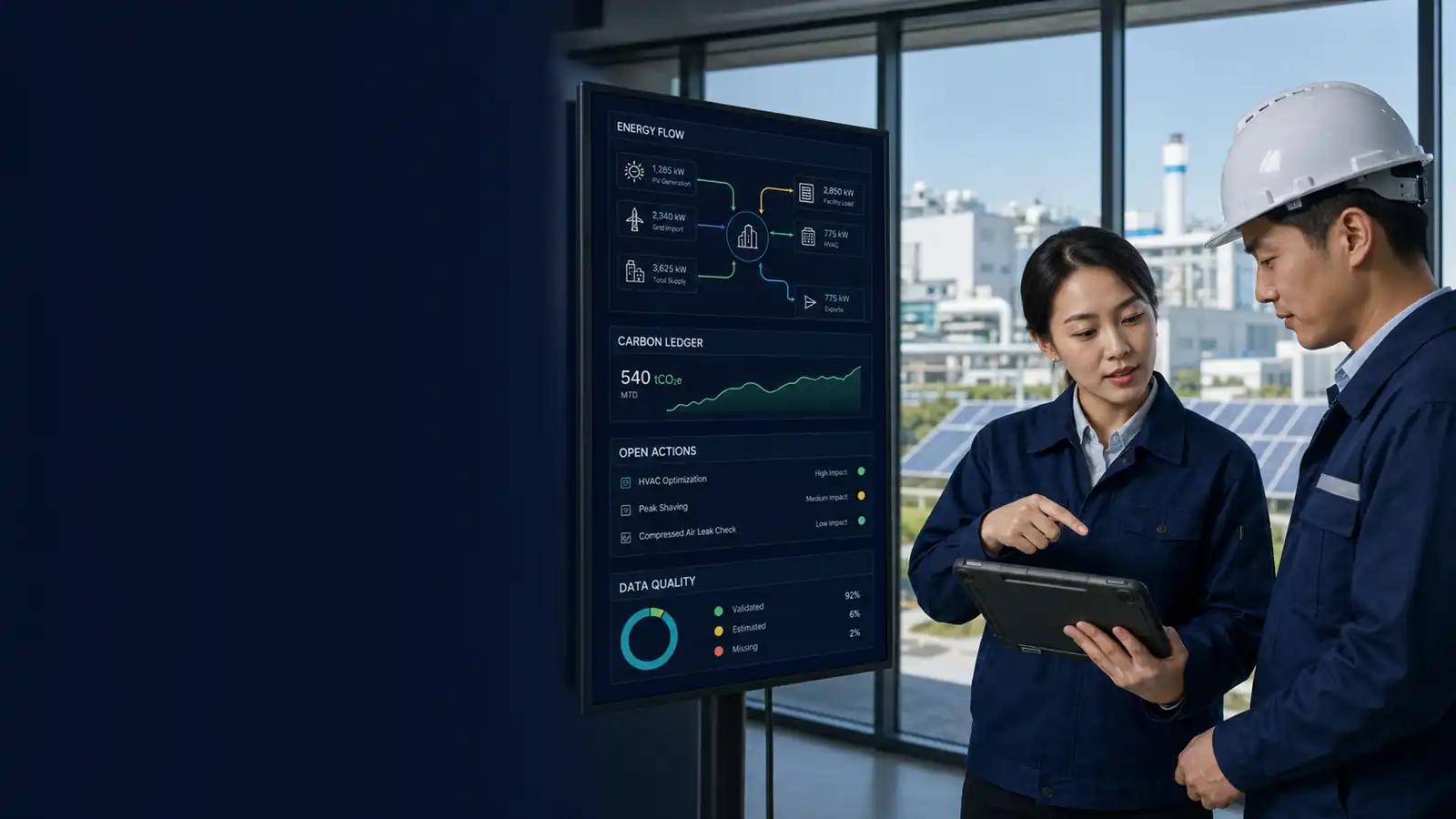
Find exceptions and savings
Manage meter topology, baselines, demand, asset efficiency, alerts and energy actions.
ENERGY & CARBON OPERATIONS
Trace every unit of energy and support every reduction with evidence
For campuses, factories, commercial buildings and multi-site enterprises, the platform connects meters, utility bills, asset status, production drivers, emission factors and decarbonization projects in one traceable loop from detection to review.
PRODUCT POSITIONING
A trusted data foundation connects energy performance, equipment operation, business drivers and carbon accounting in one accountable operating chain.
Manage meter topology, baselines, demand, asset efficiency, alerts and energy actions.
Explain intensity through output, hours, shifts, occupancy and environmental conditions.
Maintain boundaries, activity data, factors, evidence and calculation versions.
Reconcile bills, tariffs, renewable power, procurement, budgets and benefit definitions.
Use common definitions for intensity, exceptions, targets, projects and data health.
Scattered meters, delayed bills, misleading intensity, unowned exceptions, mixed factor versions and unverified savings leave energy and carbon teams stuck in month-end reporting.
OPERATING JOURNEY
Every step preserves scope, source, responsibility, rule, version and exception path. A connected meter is not necessarily trustworthy data, and a calculation is not an assured result.
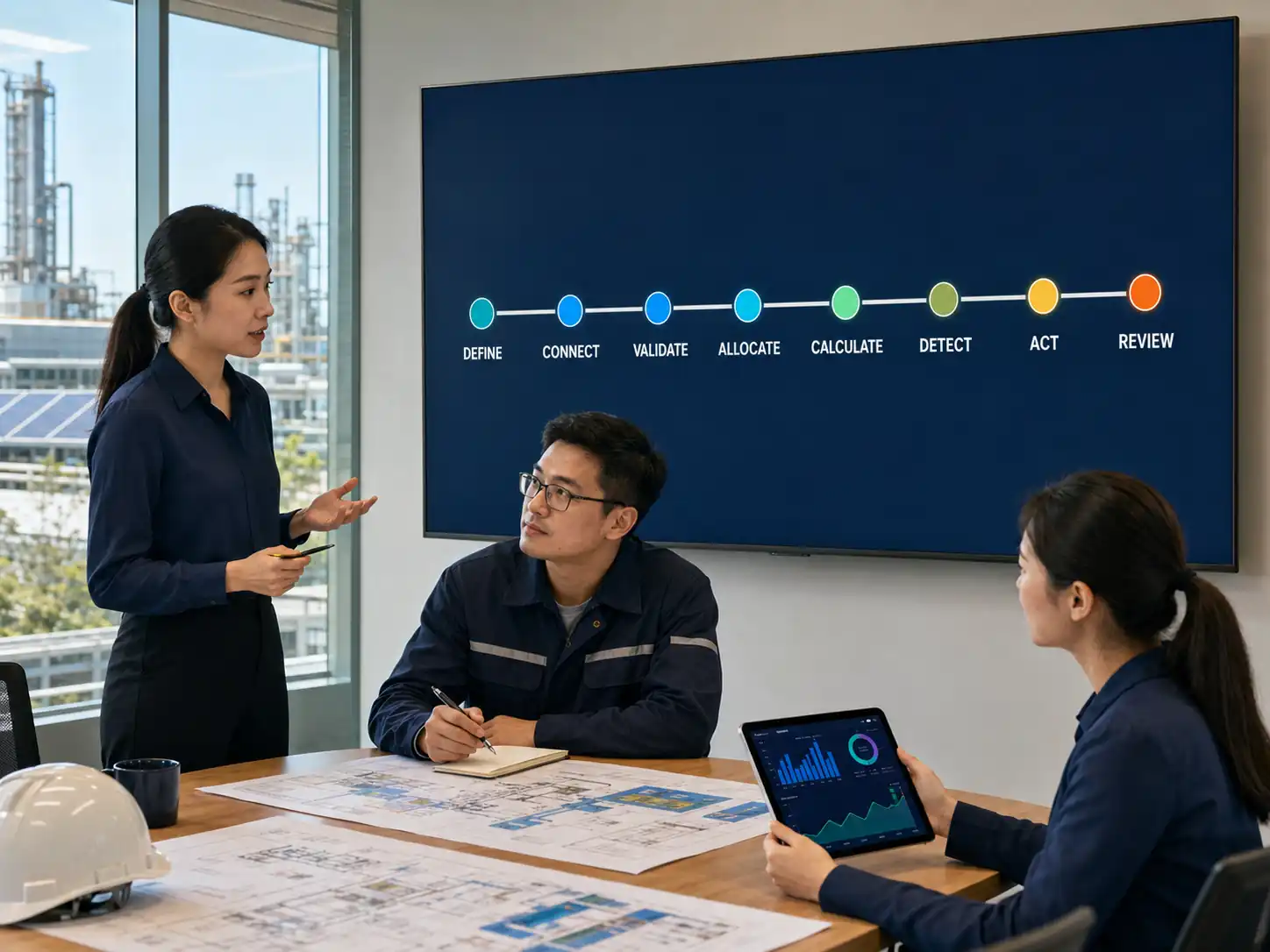
Define entities, sites, buildings, lines, equipment, utilities and meter hierarchy.
Connect meters, BMS, MES, bills, controlled spreadsheets and external data.
Detect gaps, spikes, rollover, duplication and definition conflicts with a visible trail.
Use output, weather, operating hours and area for an explainable comparison.
Turn opportunities into owners, dates, measures, verification and benefit review.
Build versioned workpapers from boundaries, activity data, factors and methods.
Check baselines, adjustments, evidence and approvals before external work.
Compare site performance, budget, project benefits, gaps and improvement plans.
METERING & DATA QUALITY
Each meter is tied to a utility, space, asset and business object. Source, interval, replacement, multiplier, calibration, gaps and estimates become explicit quality states.

SCOPE VIEW
Sites, energy teams and carbon teams share master data while each role sees only the authorized scope, avoiding duplicate maintenance and cross-entity access.
Site-operations view: review meter health, consumption, demand, exceptions and assigned actions for the authorized facility while preserving source and adjustment history.
Trace parent-child balance, virtual meters, rollover and cross-period replacement.
Preserve method, parameter, applicable period, approval and later replacement.
Connect tariff, demand, time bands, usage and financial bill variances.
EFFICIENCY OPERATIONS
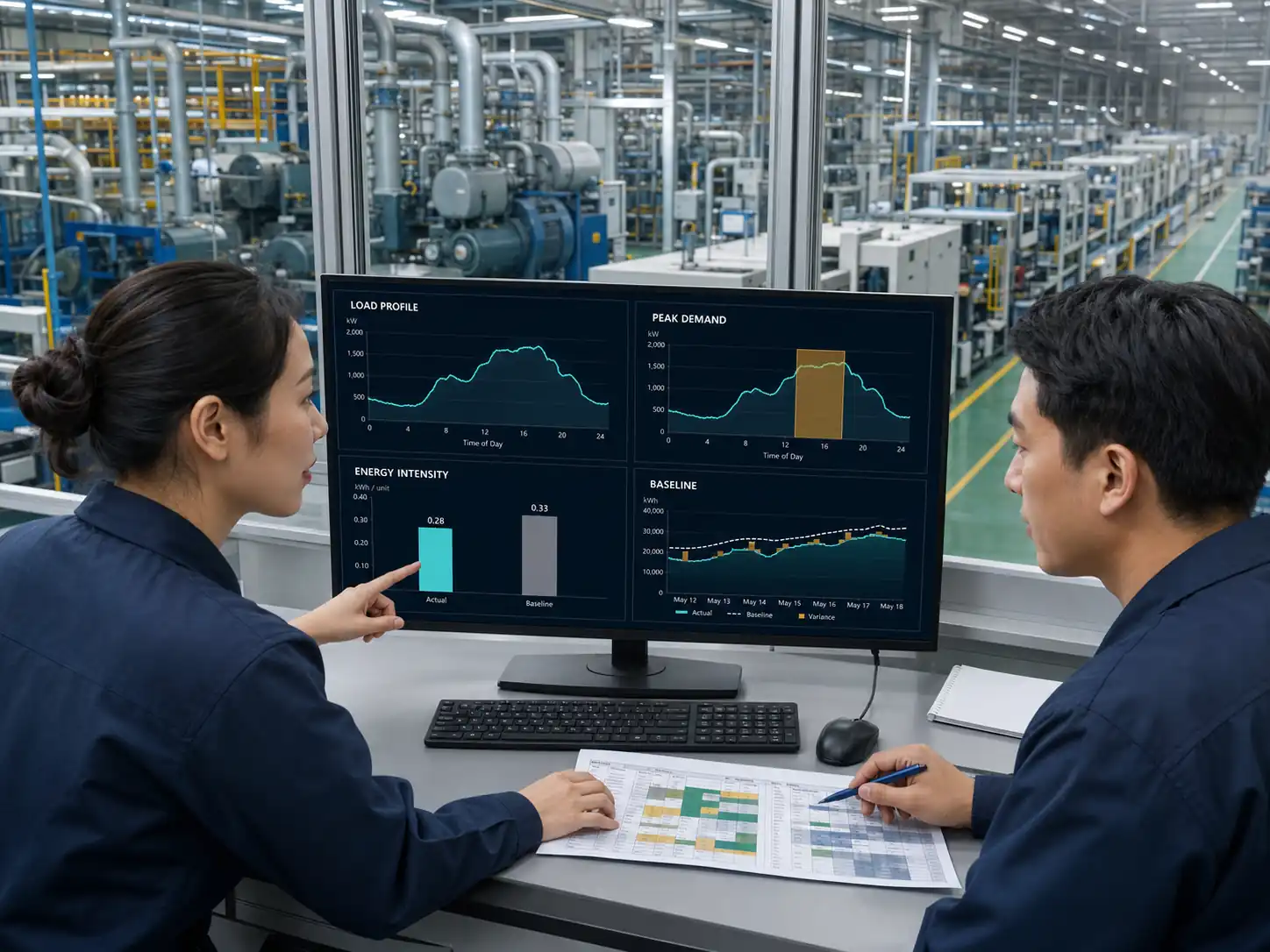
Use baselines, normalized intensity, asset efficiency, peak demand, leakage and idle load to detect, diagnose, assign, verify and review energy opportunities.
ACTION CONTROL
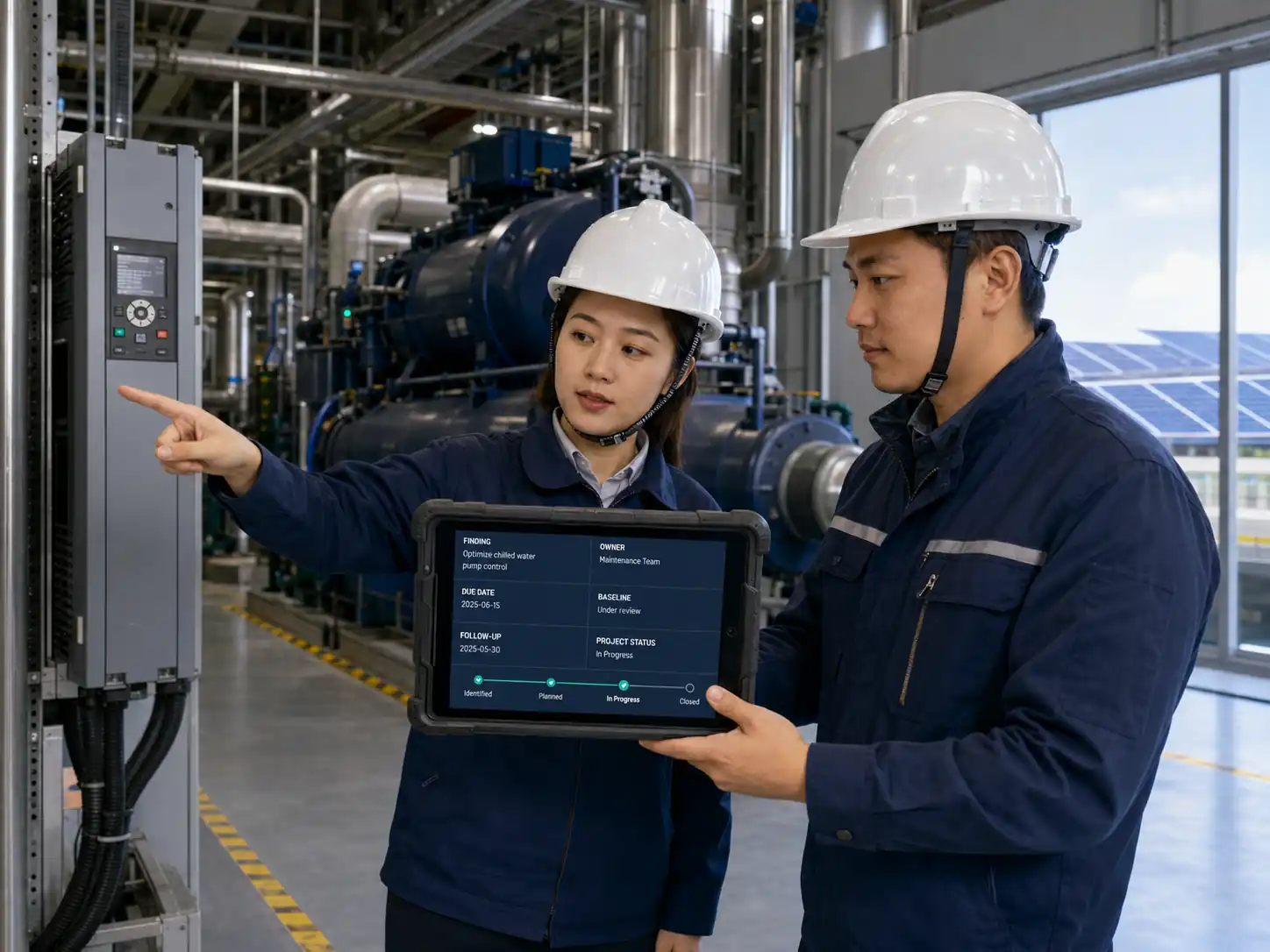
Exception severity determines notification, response and verification. Authorized roles execute any action affecting production, safety or equipment under approved procedures.
Observe variance: compare the applicable baseline and business drivers, then confirm data quality and duration before assigning any action.
CARBON ACCOUNTING
Manage entity hierarchy, emission sources, scope classification, factors, documents, versions, review comments and disclosure preparation without replacing accountable roles or assurance.

AUDITABLE WORKPAPER
Each result can return to its organizational boundary, emission source, activity data, conversion, factor source, formula, evidence and approved version.
Keep effective dates for entity, asset ownership and control changes.
Record region, year, unit, applicability and reference evidence.
Build variance notes, evidence indexes, approvals and issue lists.
FLEXIBILITY & CLEAN ENERGY
Combine load forecasts, contracted demand, time-based tariffs, solar generation, storage state and controllable load for evaluation, scheduling, monitoring and review.
DECISION SUPPORT
The platform compares scenarios and suggests schedules without bypassing protection systems, production plans, market rules or operating authority.
Expose confidence, error and model version for load and generation.
Include capacity, life, safety, contract, production and weather.
Distinguish peak reduction, shifting, self-use, procurement and carbon effect.
OPERATIONS CONSOLE
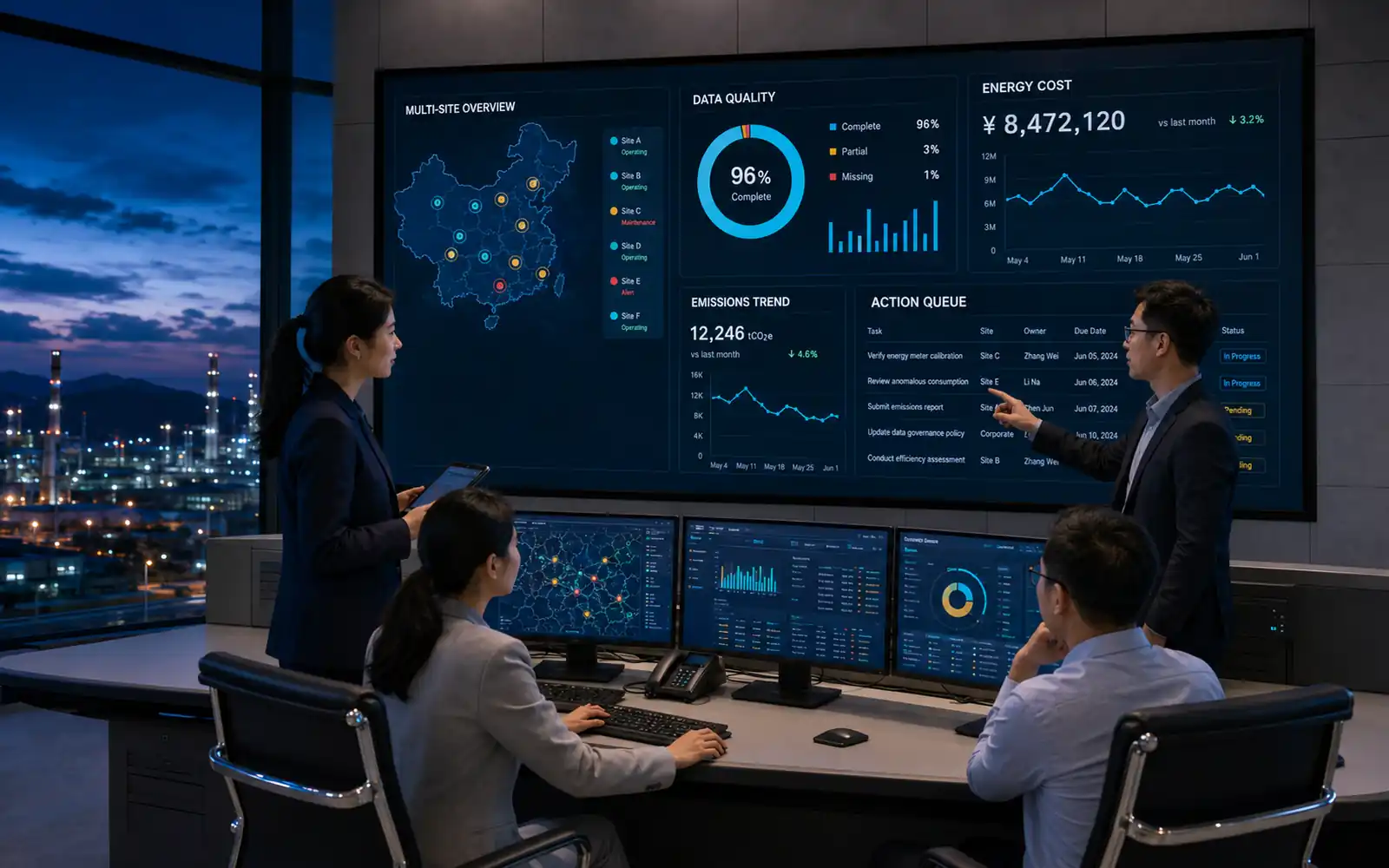
Govern entities, assets, meters, indicators, rules, actions, factors, targets and permissions while preserving data health, change history and approvals.
APPLICATION SCENARIOS
Designed for organizations with material energy use, metering capability and accountable operators, adapted to industry processes, boundaries, maturity and existing systems.
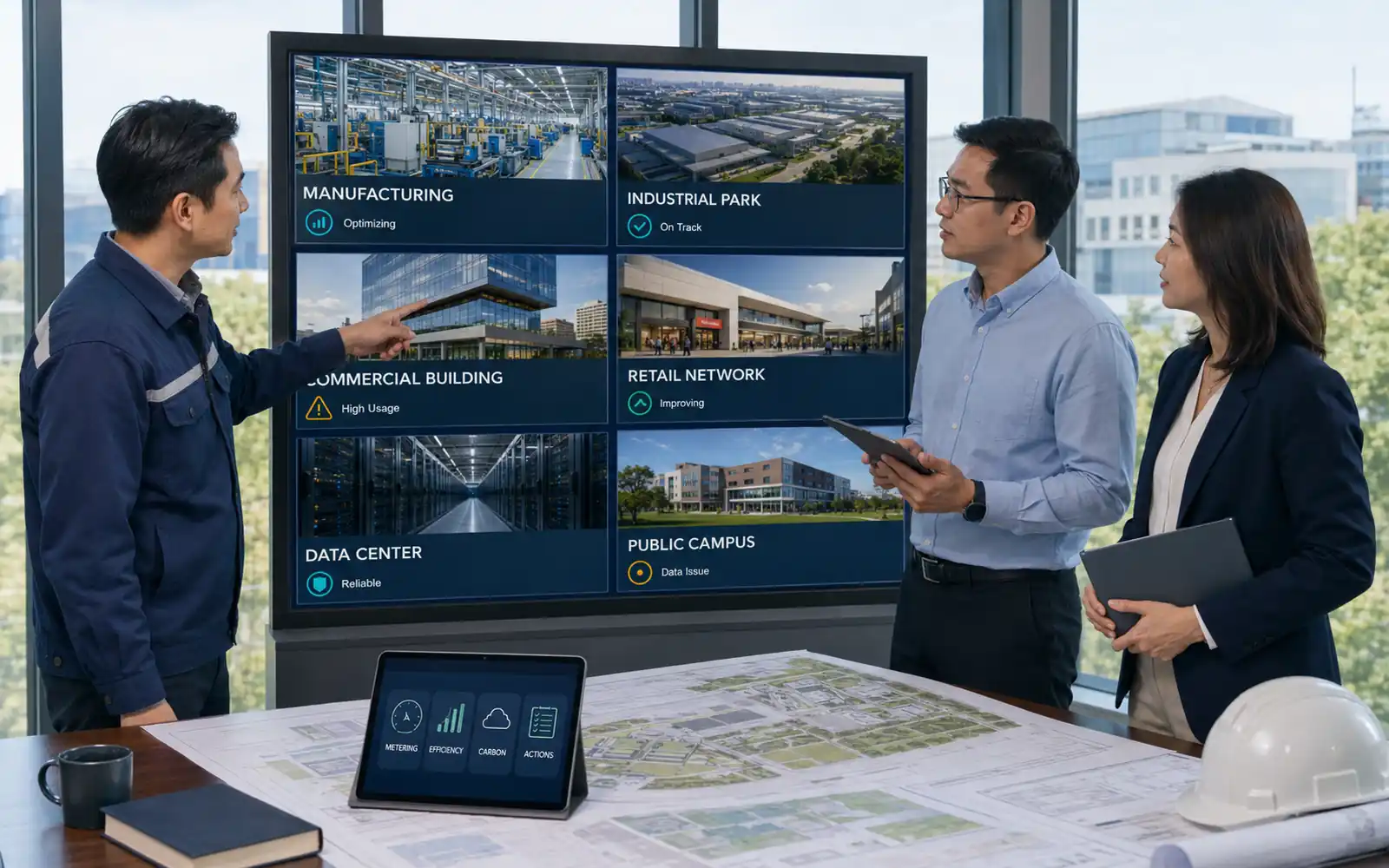
Analyze shifts, output, operations, asset efficiency, steam, gas and product intensity.
Manage multiple utilities, tenants, allocation, solar, storage, charging and services.
Use occupancy, weather, schedule and zones for HVAC, lighting and power.
Track quotas, budgets, retrofit projects, behavior and performance assessment.
Govern master data, indicators, factors and targets with regional accountability.
RESPONSIBLE USE
Energy and carbon results require professional judgment across site operation, contracts, finance, accounting methods and applicable requirements.
It can prepare versioned calculations and evidence under a selected boundary and method, but formal disclosure, validation or verification remains with accountable enterprise roles and qualified professionals.
Usually not. Existing systems can be integrated when protocols, security and data quality permit, with source, definition and sync status preserved.
No. Missing data is flagged. Any authorized estimate preserves its method, parameters, version and approval and remains visibly different from measured data.
Not by default. Authorized roles evaluate process, safety, equipment and production constraints; control remains subject to the original control system and operating procedures.
BUILD A TRUSTED BASELINE
Use existing metering, operational drivers, accounting boundaries and objectives to plan a verifiable, scalable energy and carbon operating path.