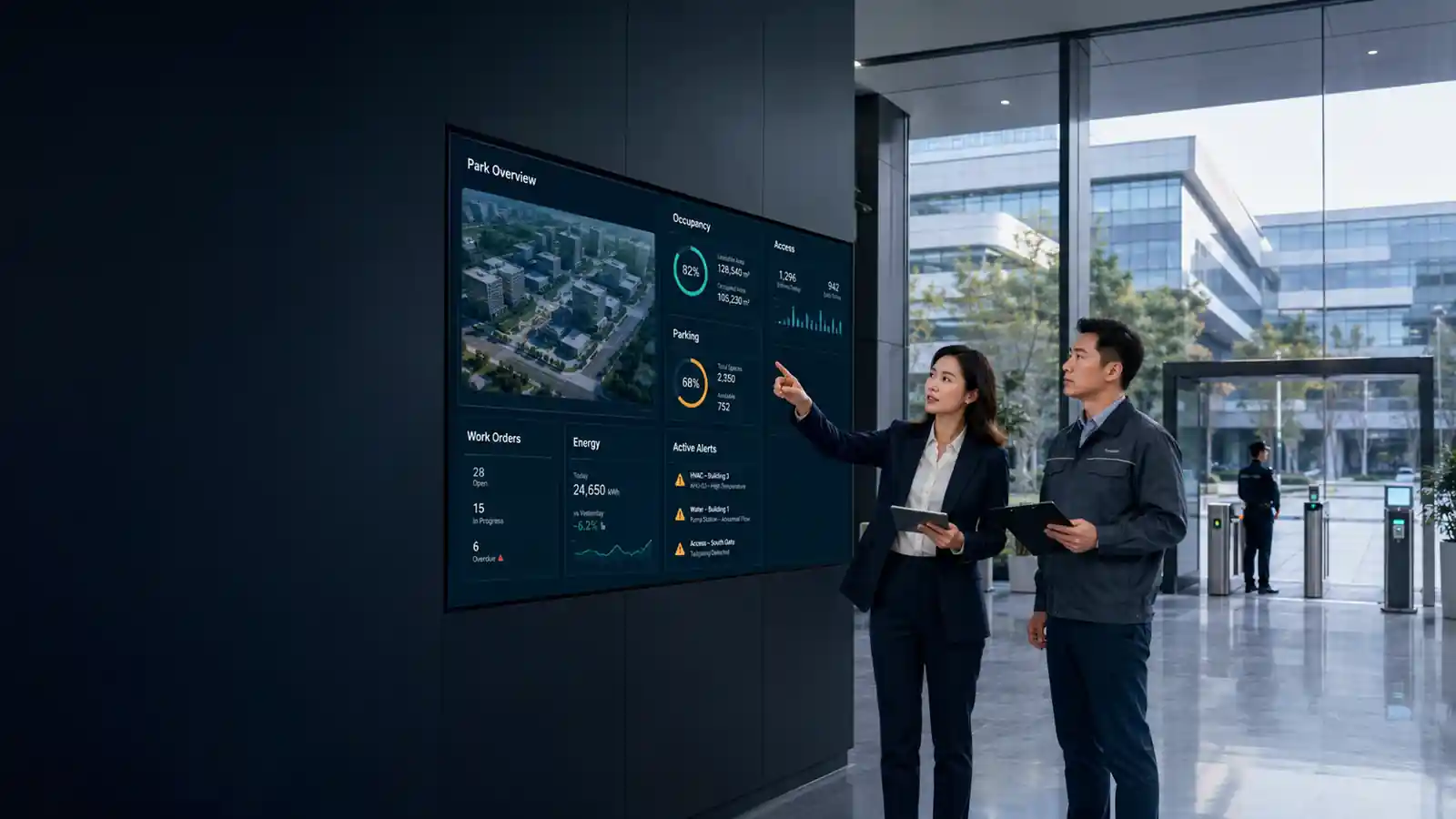
See assets and operations together
Review space use, tenant services, operating risk, energy and resource input.
SMART PARK OPERATIONS · OPERATIONS CONTROL
Operate space, sense facilities and close every service loop
Built for park owners, operators and property teams, the platform connects space, organizations, people, vehicles, assets, energy and services across tenant onboarding, access, maintenance, emergency response, energy analytics and enterprise requests.
PRODUCT POSITIONING · OPERATIONS SYSTEM
Space, organizations, people, vehicles, assets, energy, incidents and services become governed business objects that connect policy, field work and operating results.
Review space use, tenant services, operating risk, energy and resource input.
Keep a continuous record from lead, lease and handover to renewal and requests.
Govern asset registers, maintenance, work orders, parts, inspections and acceptance.
Connect access, video, fire safety, environmental alerts, response and review.
Handle onboarding, visitors, repairs, meeting rooms, parking and shared services.
Access alerts sit in device platforms, jobs in chat, energy in spreadsheets and tenant requests on phone calls, leaving state hard to verify and exceptions hard to own.
Space, tenant, asset and incident codes diverge across systems.
Acknowledge, dispatch, arrival, recovery and review remain fragmented.
OPERATIONS JOURNEY · CONTROL LOOP
Each step defines space scope, accountable role, service time, data source and exception path; an online device is not proof of a completed business outcome.
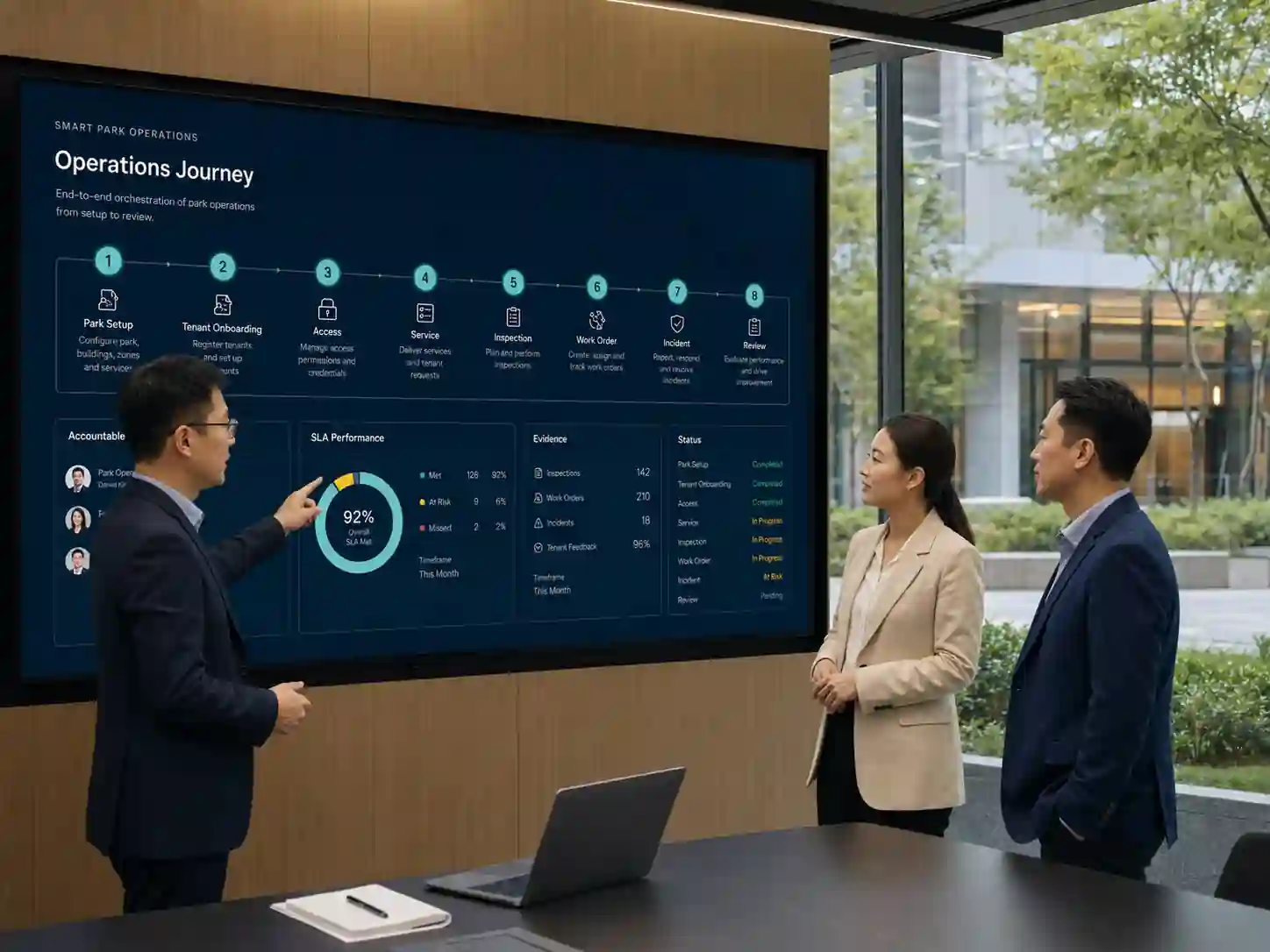
Connect parks, buildings, floors, rooms, tenants, roles and assets.
Coordinate contracts, handover, fit-out, permits, contacts and services.
Publish least-privilege access by identity, zone, time and purpose.
Turn plans, requests and alerts into assigned work through acceptance.
Match incident level to plans, contacts, response time and escalation.
Validate meters and definitions to assess end use, peaks and anomalies.
Receive repairs, meetings, parking, policy and shared-resource requests.
Compare service, assets, energy, space and risk to update the rules.
TENANT & ACCESS · ONBOARDING
Onboarding, space handover, employee identity, visitor booking, parking and temporary privileges stay linked to purpose; expiry and offboarding trigger revocation.
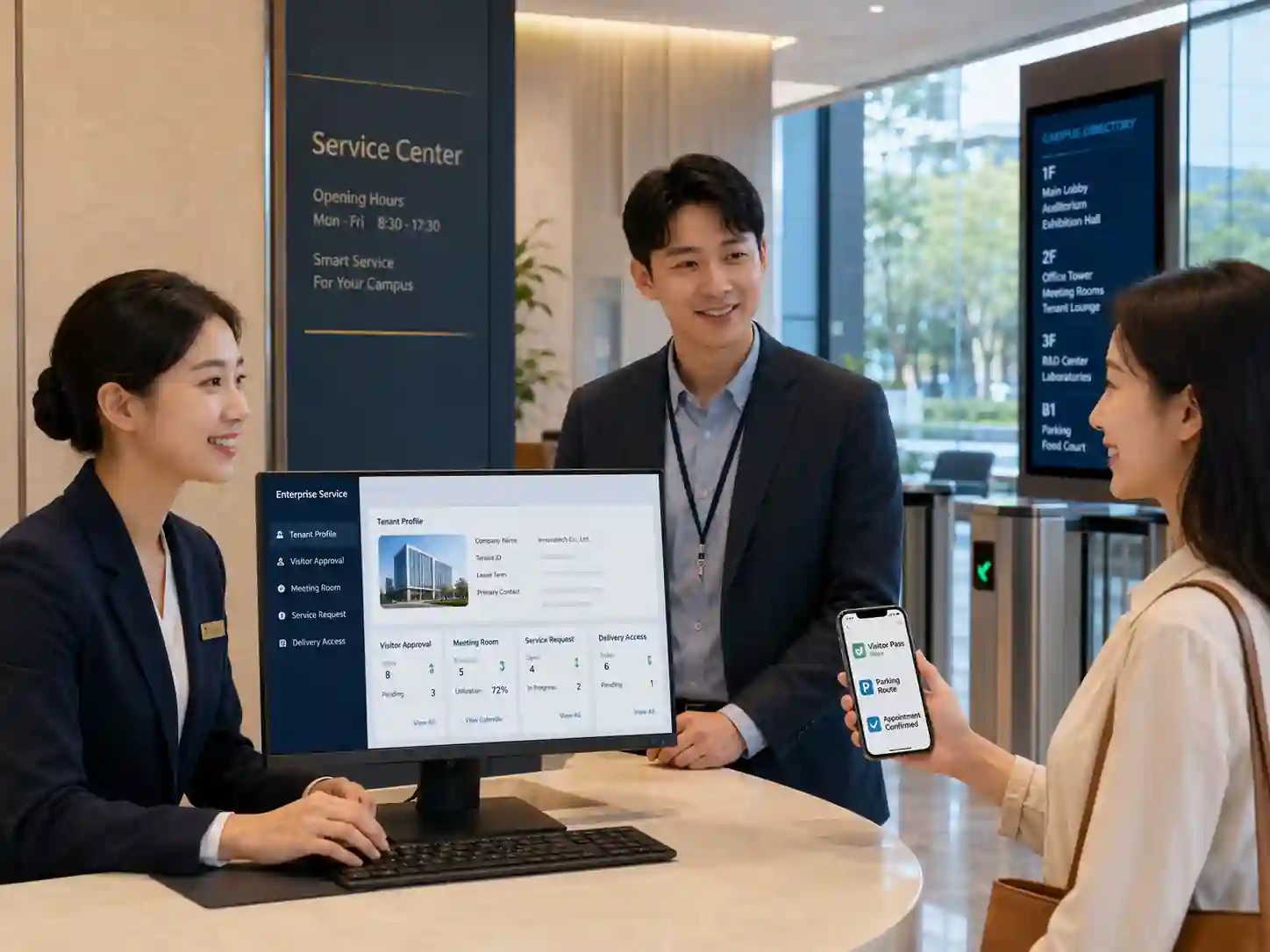
ROLE-BASED EXPERIENCE · GOVERNED SERVICE
Owners, operators, property teams, tenant administrators and employees work from the same tenant and space records without repeated forms or excess access.
Owner-operations view: review handovers, tenant services, access state and exceptions by park, building and tenant without overwriting source contracts or device records.
Unify company, contact, contract link, space, permit and service state.
Joiner, mover, visitor expiry, offboarding and blocklist trigger change.
Offline readers, failed publication and anti-passback enter response queues.
FACILITIES & WORK ORDERS · ASSET CARE
Start with location, asset attributes and maintenance obligations, then connect inspections, service plans, alerts, requests, dispatch, parts, downtime, acceptance and cost.
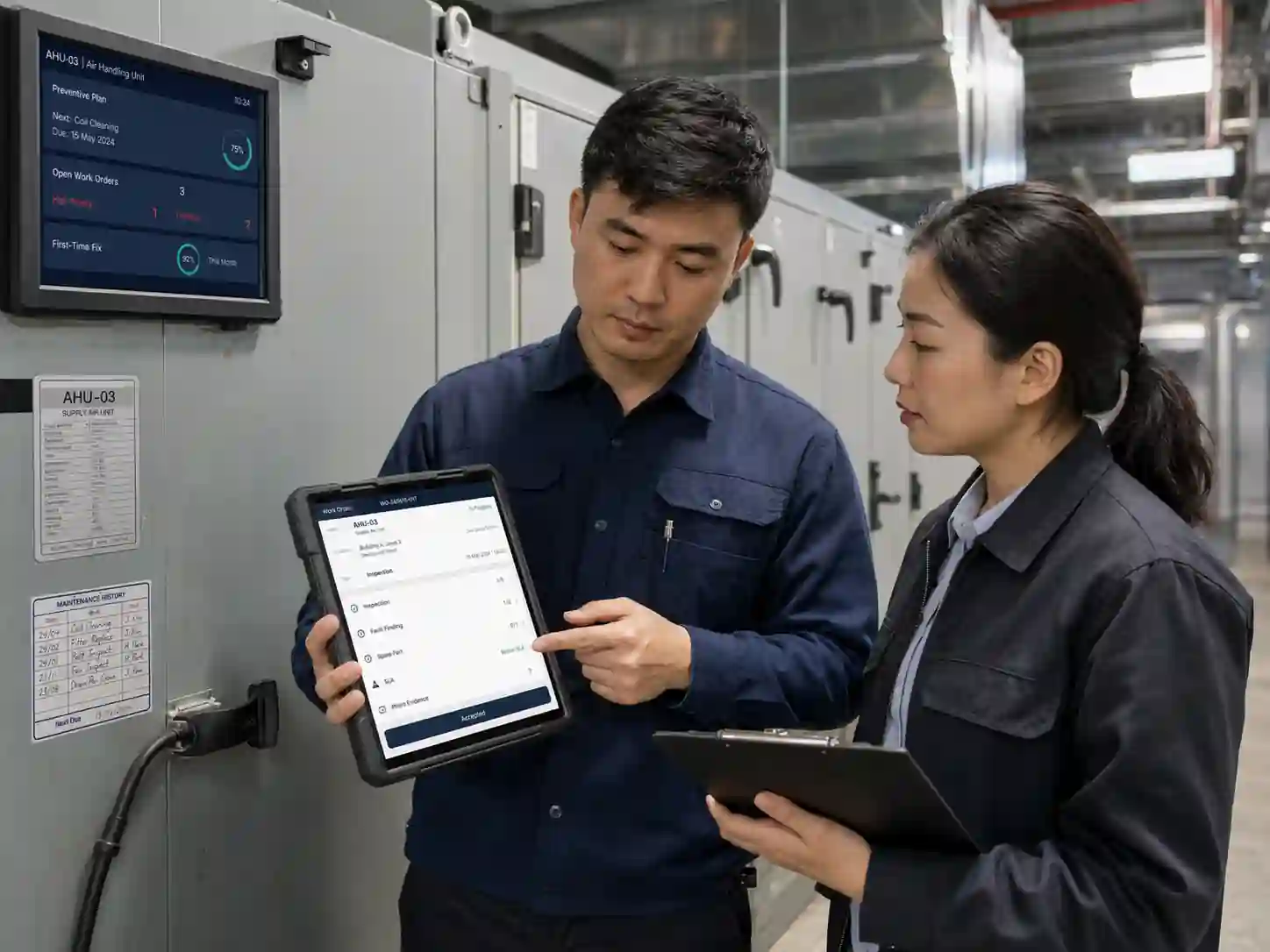
ASSET TO SERVICE · VERIFIED RECOVERY
Work orders stay linked to assets, spaces, alerts and affected services, retaining acceptance, arrival, action, material, downtime and feedback.
Unify code, location, model, contractor, warranty and criticality.
Combine procedure, runtime, history and season into schedules.
Separate accept, response, arrival, restore, verify and pause reason.
Link issue, return, replacement, external labor and asset value.
SECURITY & EMERGENCY · INCIDENT RESPONSE
Bring access, video, perimeter, fire safety, environmental and human reports together, then match plans and ownership by type, severity, location and time.
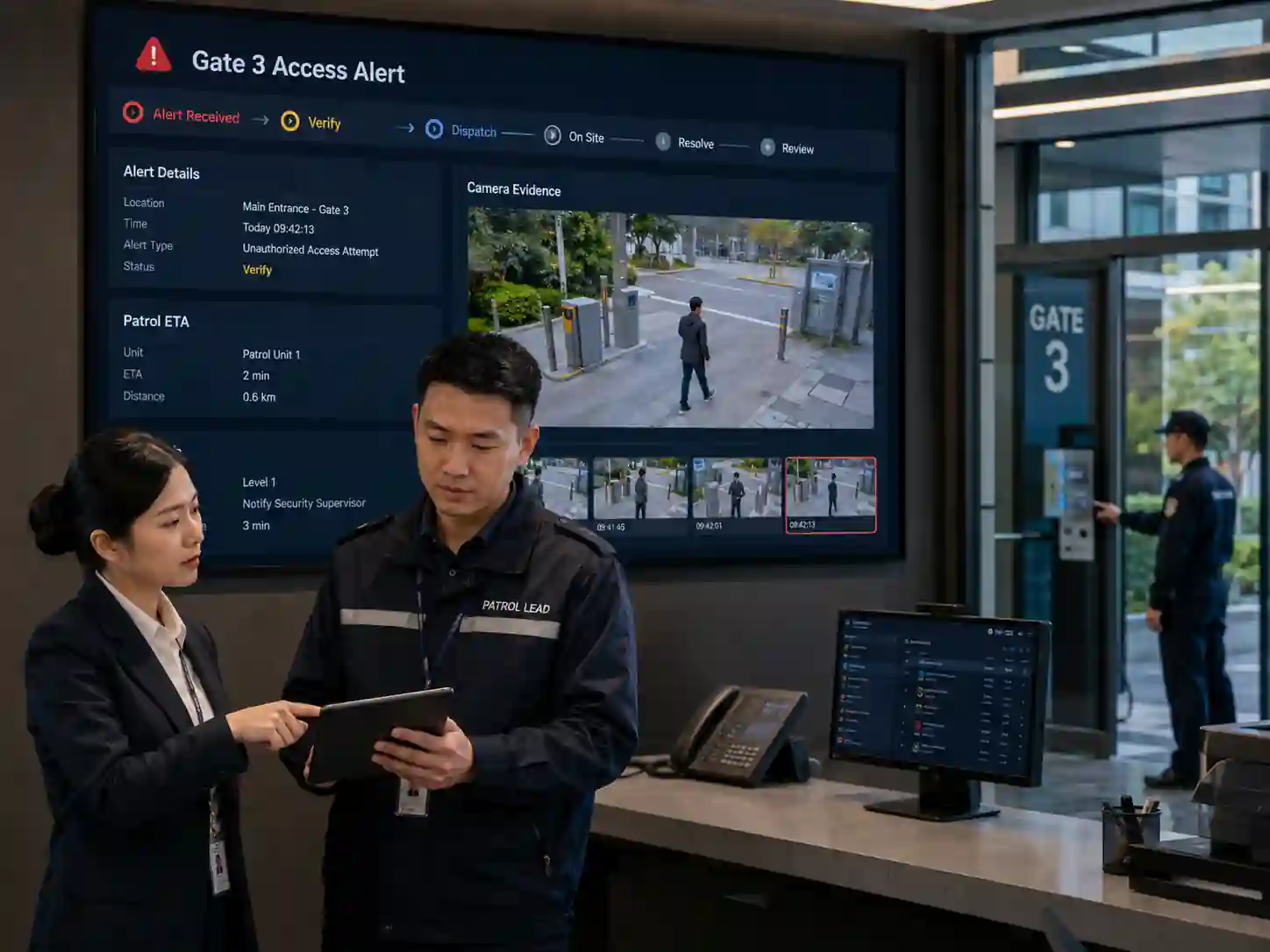
INCIDENT RESPONSE · ACCOUNTABLE ACTION
Automated suggestions do not replace field expertise. Major incidents follow statutory and park plans with complete escalation, communication and recovery records.
Attention event: the duty role verifies source, location and impact, deduplicates the event, assigns an owner and records resolution within the service window.
Relate repeated or cascading events by time, space, asset and object.
Retain scope, contacts, resources, steps and escalation conditions.
Trace verify, arrive, isolate, coordinate, recover and review.
ENERGY & CARBON · RESOURCE OPERATIONS
Unify electricity, water, gas, thermal energy and renewables while retaining meter, point, multiplier, interval and estimate markers for end-use, zone and tenant analysis.
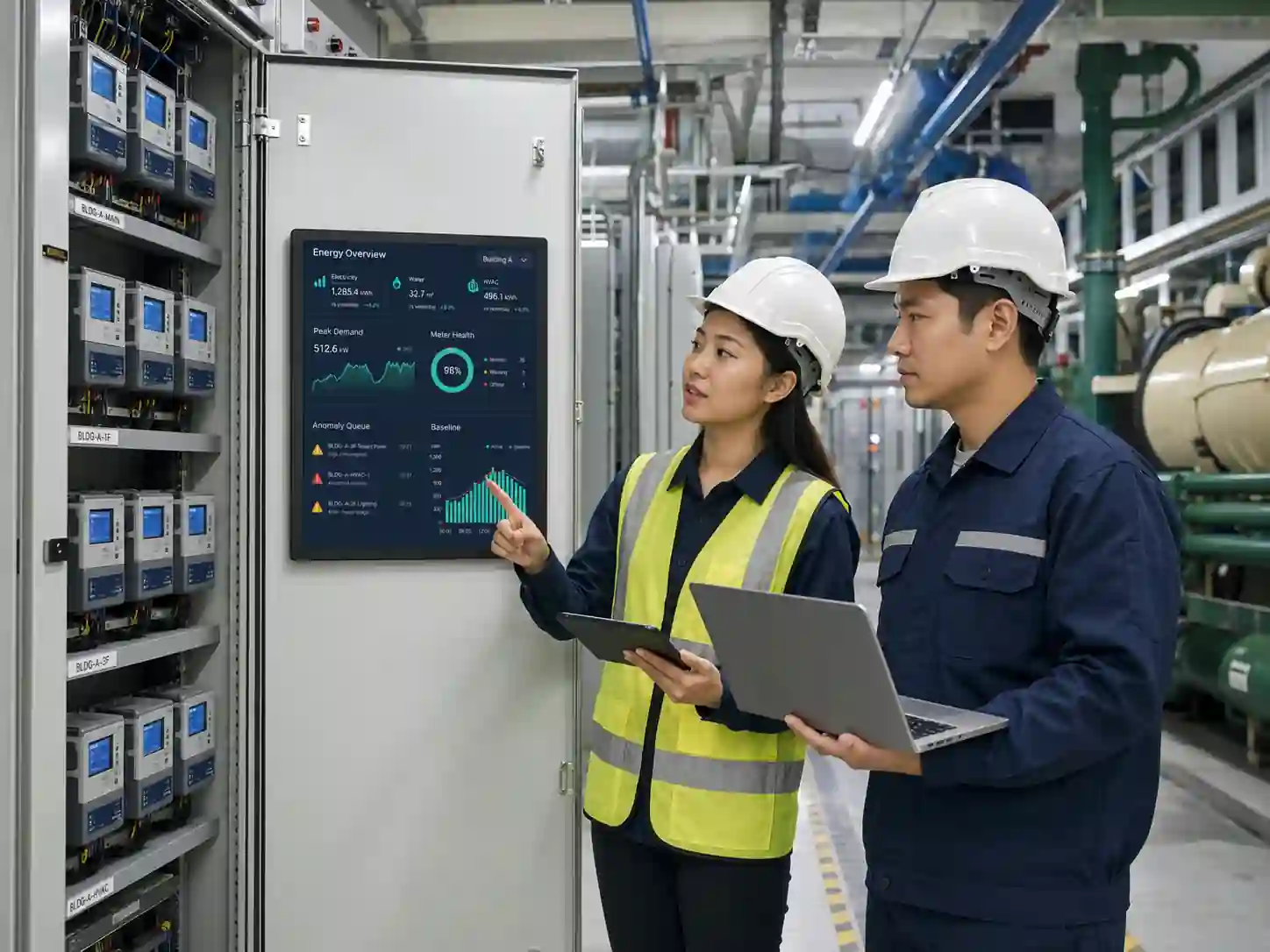
METER TO ACTION · TRACEABLE ASSUMPTIONS
Anomalies relate space, tenant, weather, asset operation and production calendars. Authorized action is followed by before-and-after verification on aligned definitions.
Trace parent-child meters, virtual meters, multipliers, collection and swaps.
Compare baselines, periods, weather, occupancy and asset schedules.
Approve temperature, schedule and load changes, retaining receipts.
Separate activity data, factors, estimates, verification and disclosure.
ENTERPRISE SERVICES · TENANT EXPERIENCE
Tenants use one entry point for repairs, visitors, parking, meetings, fit-out, policy help and shared services while operators route work through catalogs, service levels and authority.
TENANT EXPERIENCE · SERVICE JOURNEY
Tenants start from a service catalog and see the owner, expected time, field progress, charging basis and acceptance. Cross-team cases retain one accountable role.
Each tenant, space and contact sees the right services and evidence.
Transfers, reviews and vendors stay in one case and service clock.
Completion evidence, charges, tenant acceptance and feedback stay together.
Service levels can vary by park, tenant tier, request type and working calendar.
State eligibility, evidence, owner, service time, charging basis and escalation for each service to reduce repeated communication.
Relate ratings to cases and stages, then turn recurring issues into process, capacity and supplier improvement—not a single score.
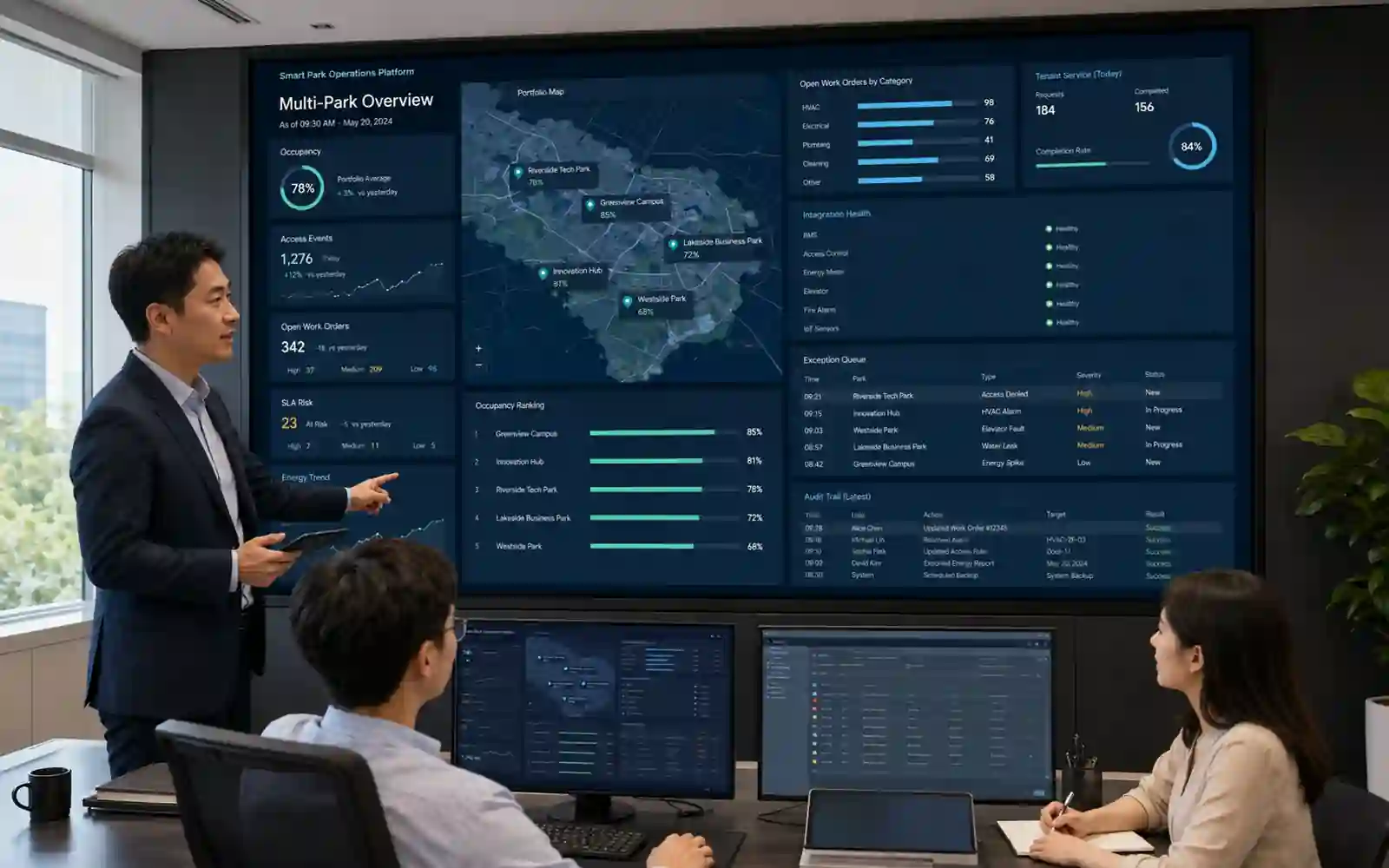
PARK COMMAND CENTER · OPERATIONS GOVERNANCE
The console goes beyond maps and metrics to govern space, tenants, access, assets, service catalogs, plans, alert rules, integration health and audit trails.
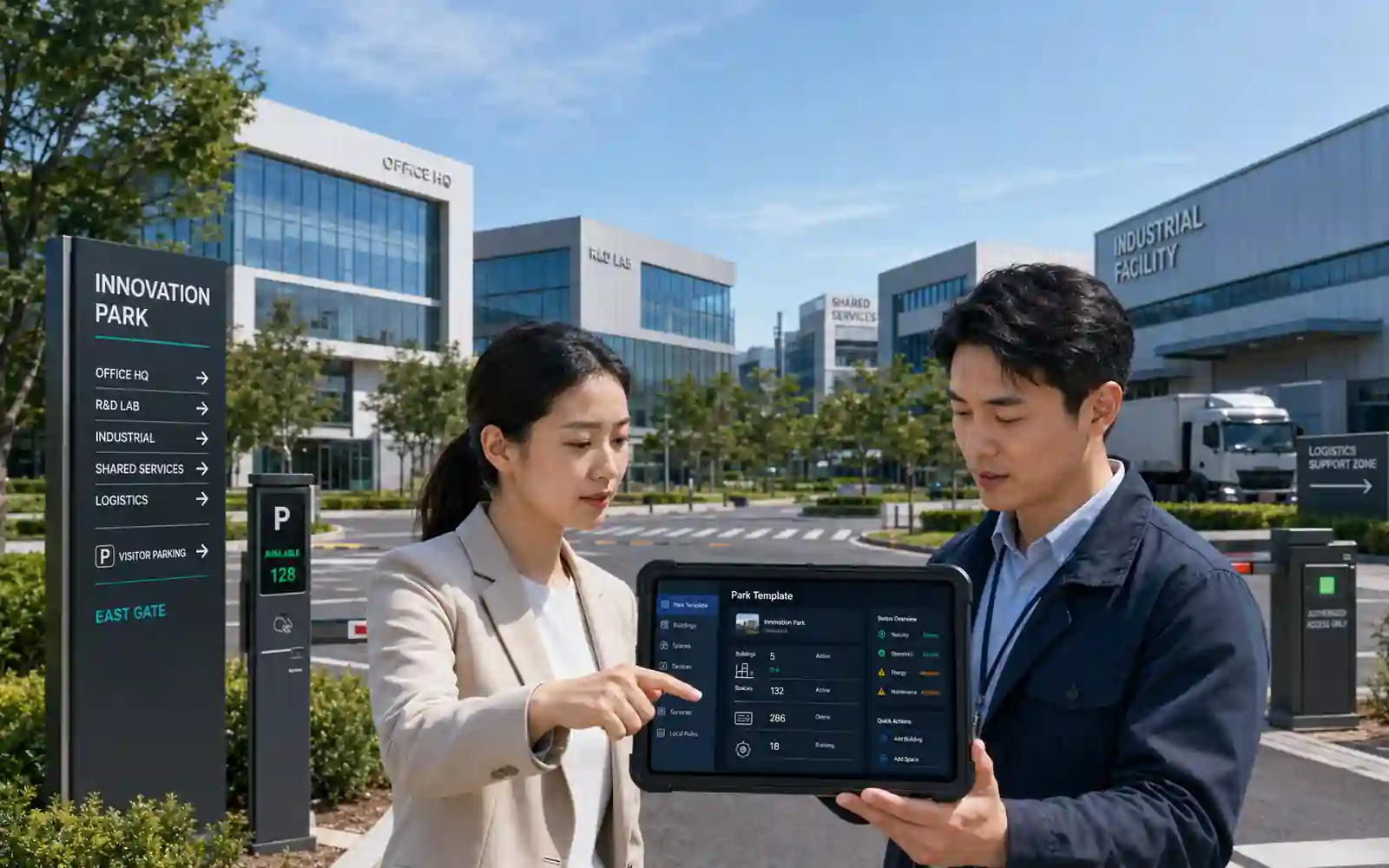
APPLICATION SCENARIOS · PARK FORMATS
Start with shared space, tenant, facility, incident, energy and service capabilities, then configure workflow, professional systems and data access by park type.
Handover, company profiles, policy services, events and ecosystem resources.
Visitors, parking, meetings, workplaces, facilities and employee services.
Contractors, vehicle booking, docks, high-risk work and emergency response.
Owners, property, operators, tenants and vendors share data by duty.
End use, peaks, solar-storage-charging, carbon data and retrofit tracking.
Connect old systems gradually, govern records and improve processes in phases.
SYSTEM BOUNDARIES · RESPONSIBLE USE
The platform does not replace professional judgment or statutory accountability for security, fire safety, regulated equipment, or energy metering; it provides data, rules, workflow and evidence rather than an automatic professional conclusion.
Not necessarily. It can connect existing professional systems to align operating objects, incident work and audit while field control and statutory duties remain with the relevant systems and roles.
Privileges relate tenant, role, space, period and purpose. Employment change, visitor expiry, invalid credentials, move-out or manual revocation all create an auditable change.
The platform records response, arrival, restoration, acceptance and pause separately; every pause requires a reason, evidence and authorized review.
The platform can aggregate and validate readings, but formal settlement still depends on qualified meters, contract definitions, reading rules and authorized verification.
BUILD AN OPERABLE PARK MODEL · START WITH A CONTROL LOOP
Plan space, master data, authority, work orders, response plans and interfaces around existing access, video, fire safety, BAS, metering, parking and property systems.